
The Ghost Bomb Six {No.1}
MASSACHUSETTS ... 2020 Early Spring Deaths, Astronomical Investment Gains in 2021 & Unexpected Mortality After the Vaccine Rollout



In my last post I laid out the parts of a little puzzle I am working on.
In the spring of 2020 there were some places in this country that saw very unseasonal increased mortality.
In the following year (fiscal year 2021) many of these same places had huge windfalls in their public employee pension plans due to historic investment gains.
These investment gains were happening simultaneously with additional increased member mortality into 2021 and beyond.
A look back at the solvency of these same pension plans in 2019 shows that many of these locations that had the strange 2020 spring death surge were in pretty bad financial shape right before the pandemic hit.
.
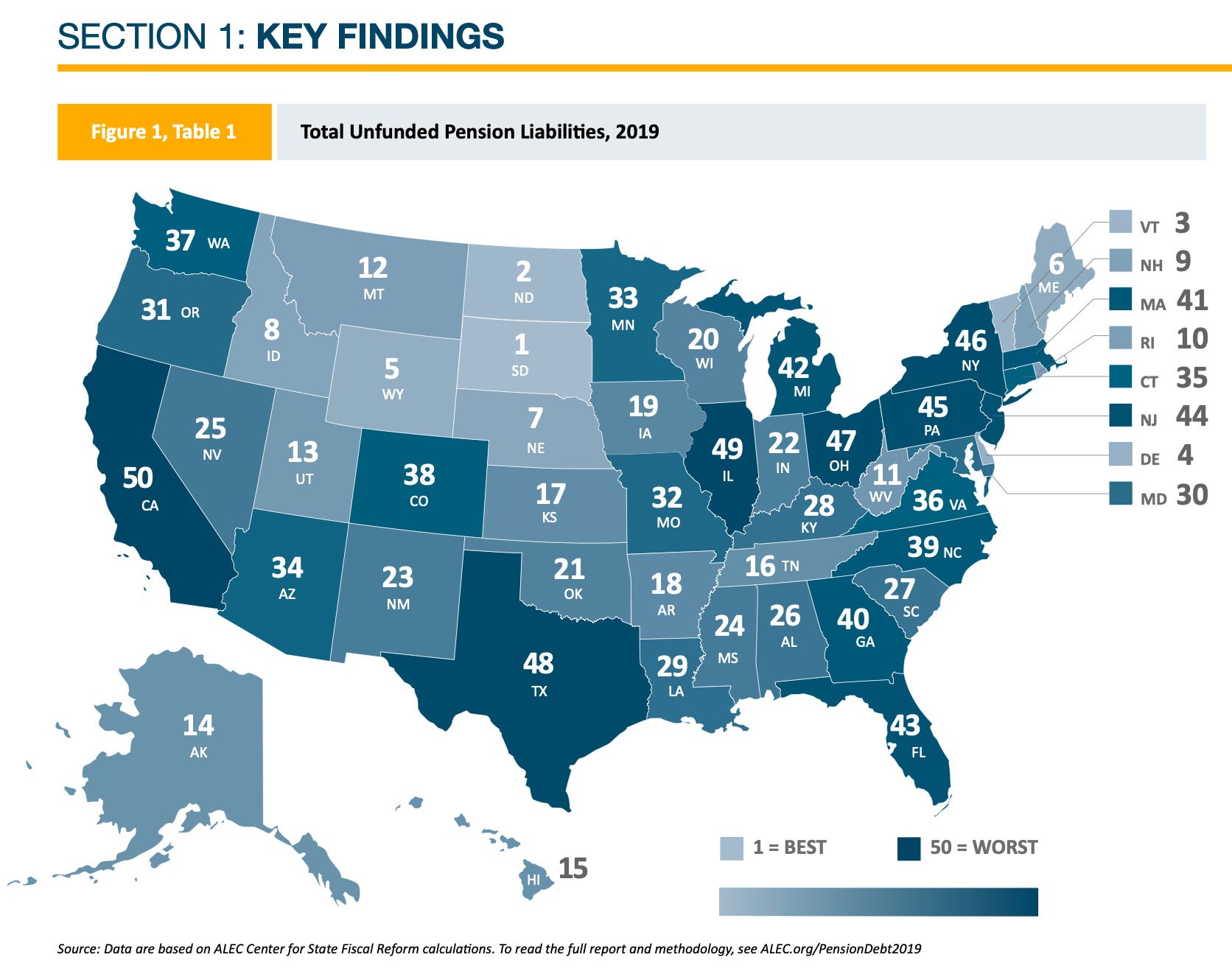
Previously I pointed out that in the 14 US state locations that saw this big spring mortality spike, there were six that also showed up in the bottom ten of the worst pensions of 2019.
Since I have dubbed that April/May death surge the “Ghost Bomb,” these places are now the Ghost Bomb Six.
They are:
Massachusetts
Pension System Rank: 41
Michigan
Pension System Rank: 42
New Jersey
Pension System Rank: 44
Pennsylvania
Pension System Rank: 45
New York …
Pension System Rank: 46
Illinois
Pension System Rank: 49
.
The pensions are ranked with 1=best, and 50=worst.
.
.
.
What I am going to attempt next is to show you just how well these troubled pension plans did investment-wise in fiscal year 2021. After that, I will try and shed some light on how many of the pension system’s members died in the same period.
If you have been with me for some time, then you know that not all pension reports are structured the same. I will try my best to make my assessment of each of the six places as consistent as I can.
.
With that said, let’s go to Massachusetts.
.
.
.
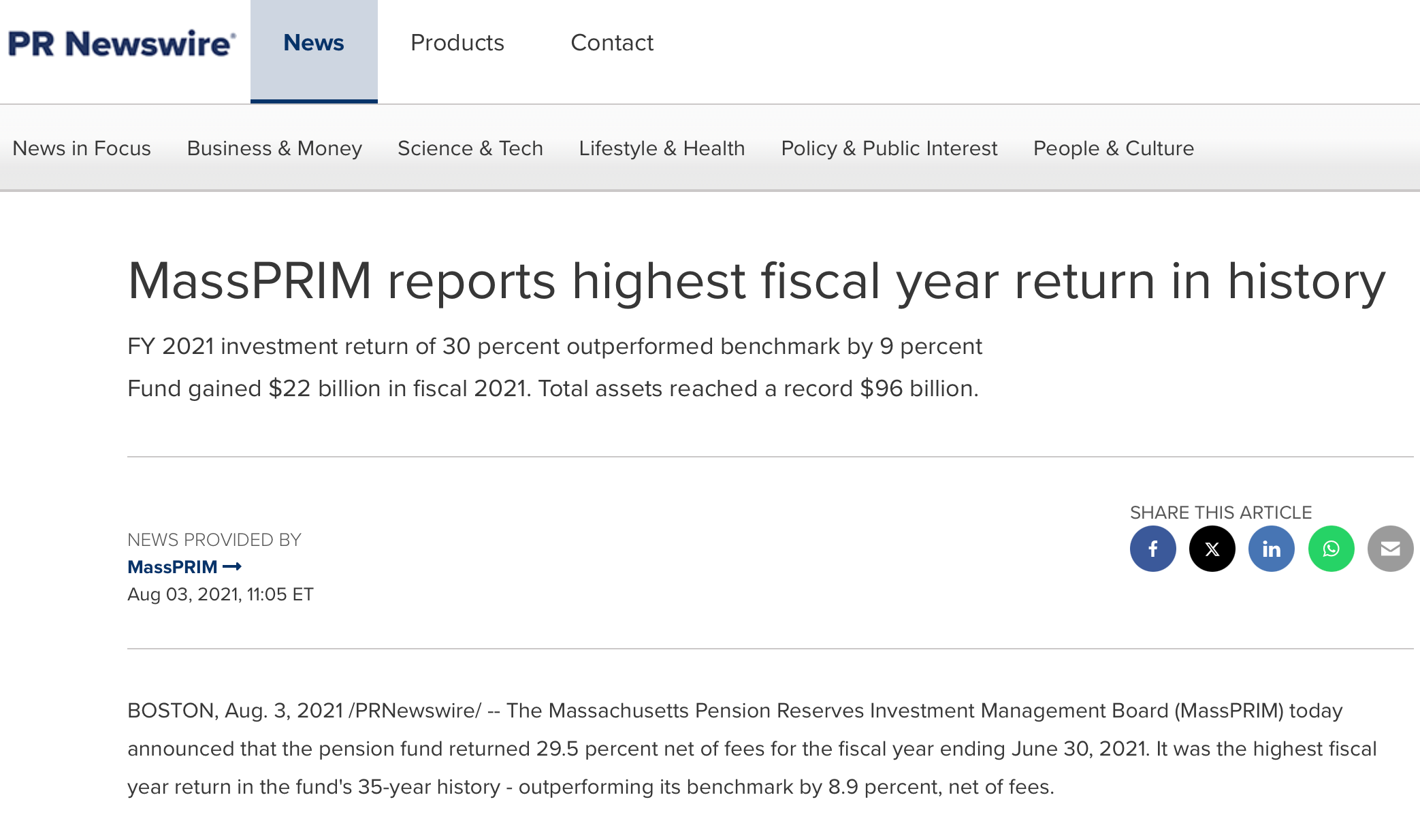
BOSTON, Aug. 3, 2021 /PRNewswire/
“The Massachusetts Pension Reserves Investment Management Board (MassPRIM) today announced that the pension fund returned 29.5 percent net of fees for the fiscal year ending June 30, 2021. It was the highest fiscal year return in the fund’s 35-year history - outperforming its benchmark by 8.9 percent, net of fees.
MassPRIM’s record-setting return equates to a net investment gain of $22.1 billion for the fiscal year, $6.7 billion above a benchmark return, net of fees. Assets under management reached a record $95.7 billion, while net outflows to pay pension benefits were approximately $1.2 billion.
The return is the highest MassPRIM has recorded since 1986 –the year the fund was established –when it achieved a return of 25.6 percent, and the highest relative return since 2000, when the fund outperformed by 5.9 percent.”
.
.
.
When I first travelled to Massachusetts to look at their pension system, I ran into a bit of a roadblock. It seems that there are 104 pension systems there. And no one organization oversees all of them and makes a single report. (Probably the closest we will get to that is the MassPRIM that I quoted above).
Without making you read my entire process of discovery there, I will just share a few pieces from that earlier look around. One of the bigger groups of those 104 is the MSRB (Massachusetts State Retirement Board).
Just now I went back to one of their past reports to see what this one pension group in Massachusetts experienced with their investments in FY2021:
.
page 13
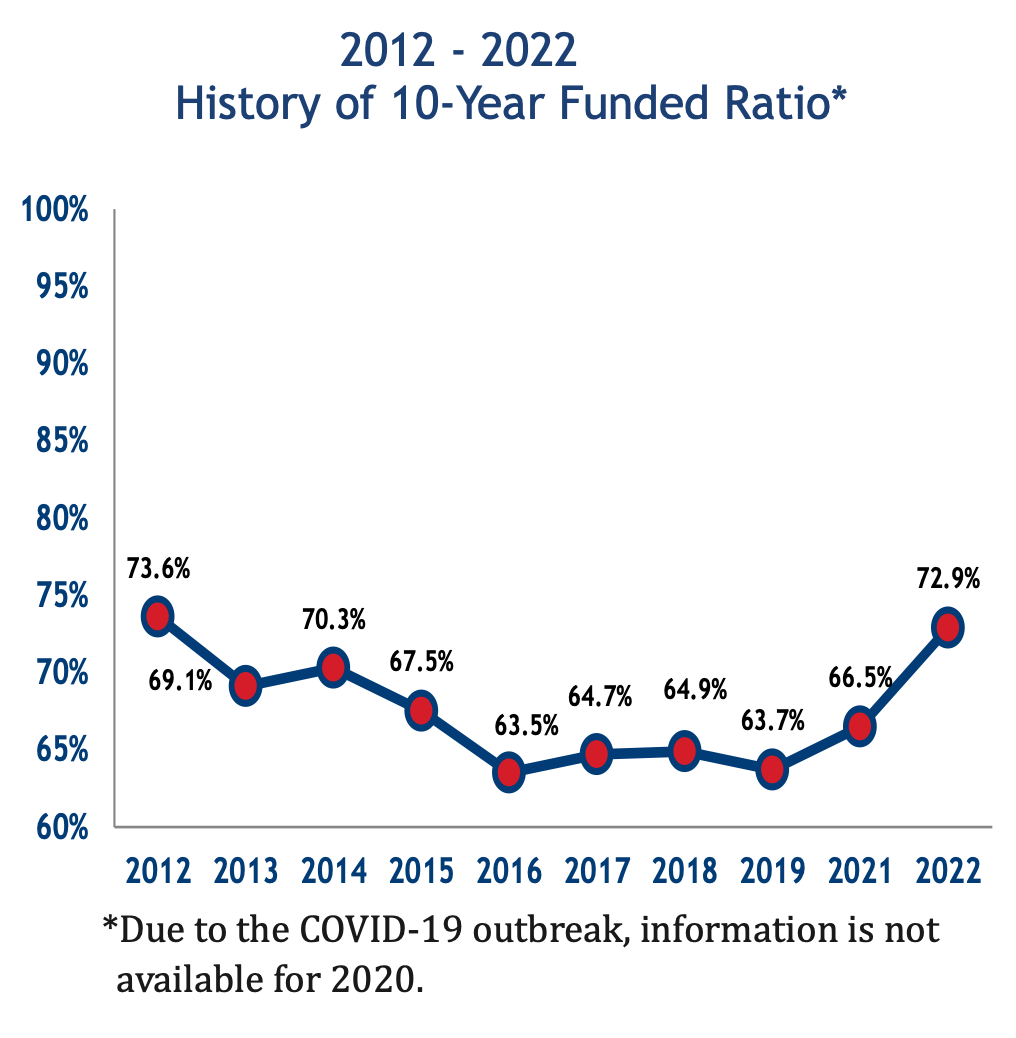
*so even though they can’t tell us what happened in FY2020, just look at that major turnaround in the funded ratio starting in FY2021!
.
page 20
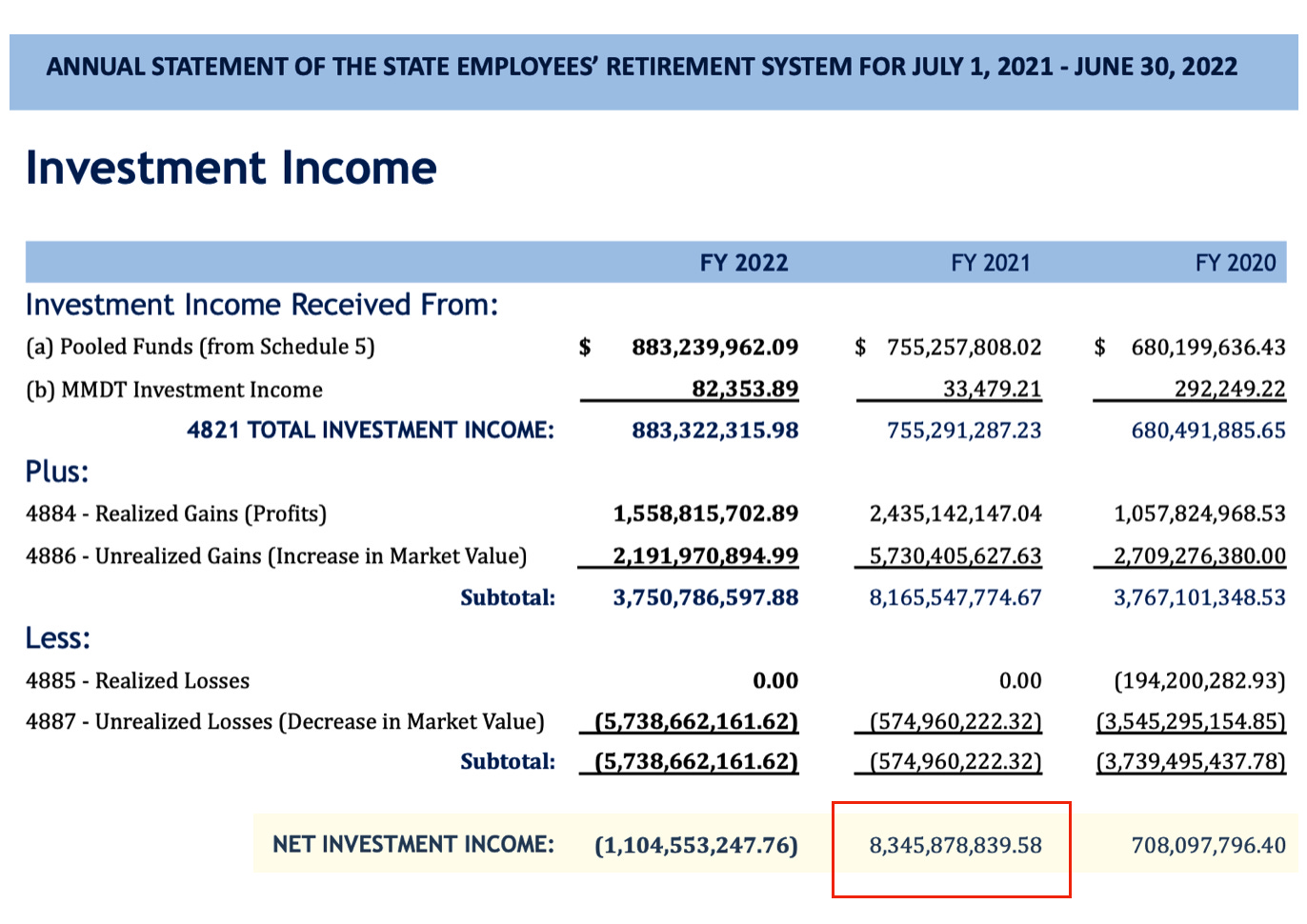
As you can see, the jump from FY2020’s net investment income to the one in FY2021 is a steep and dramatic one. Nearly an 8 billion dollar swing!
(Should you want to look at all MSRB past reports, they are here.)
.
.
.
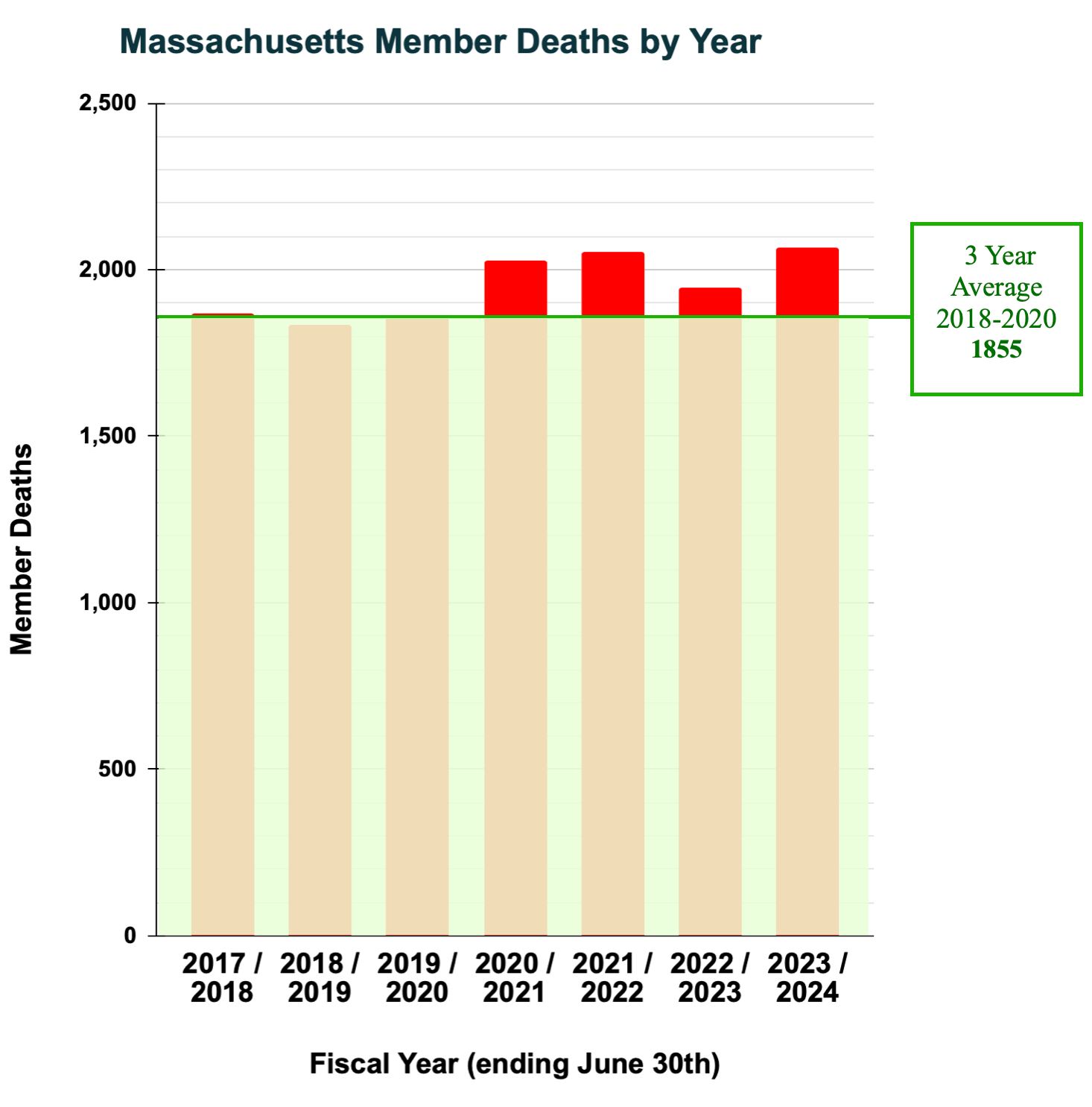
Using the numbers from the past MSRB reports I was able to make this graph:
.
As you can see, the rise above the previous mortality average happens in FY2021 and stays elevated into FY2022 … and beyond.
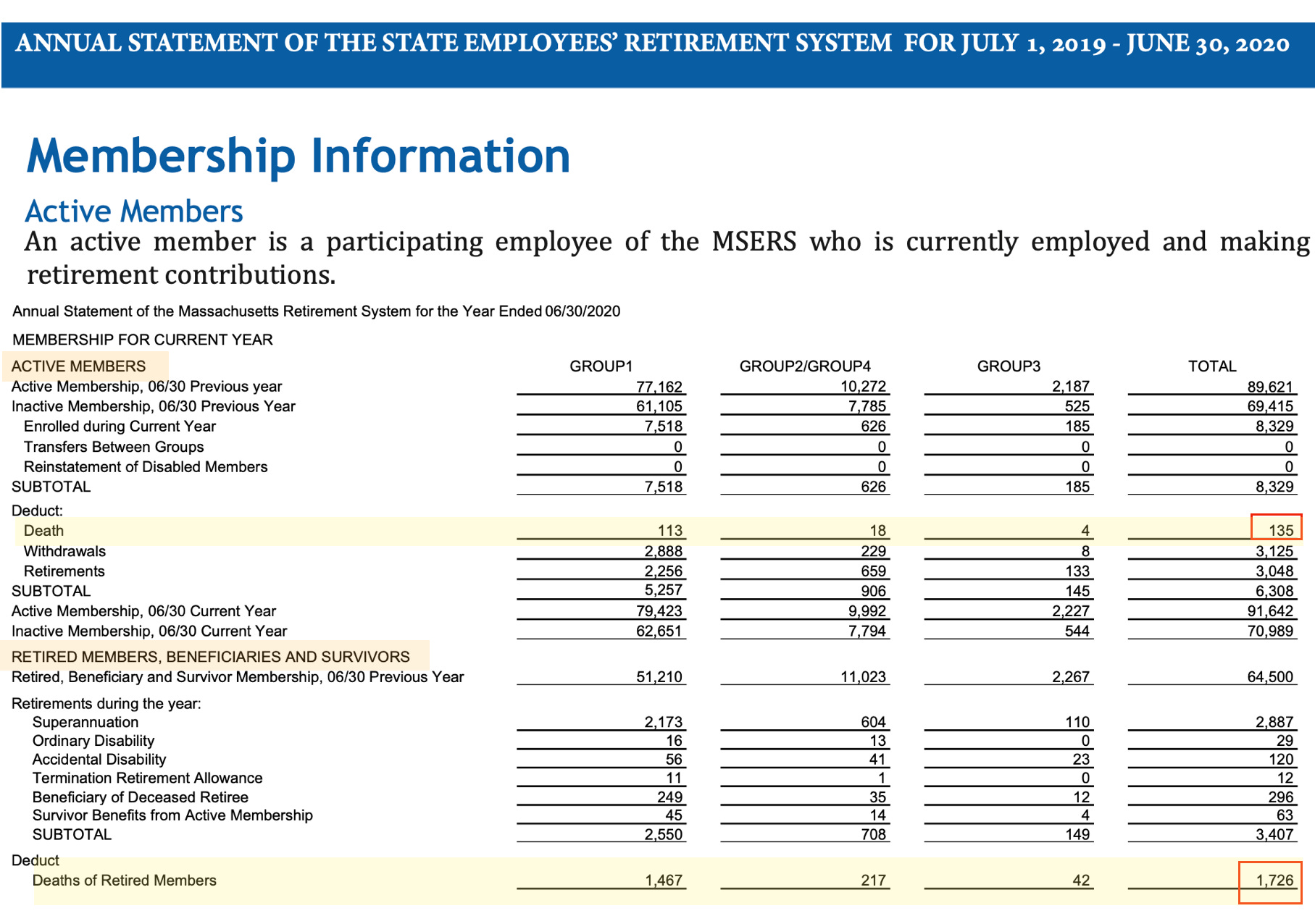
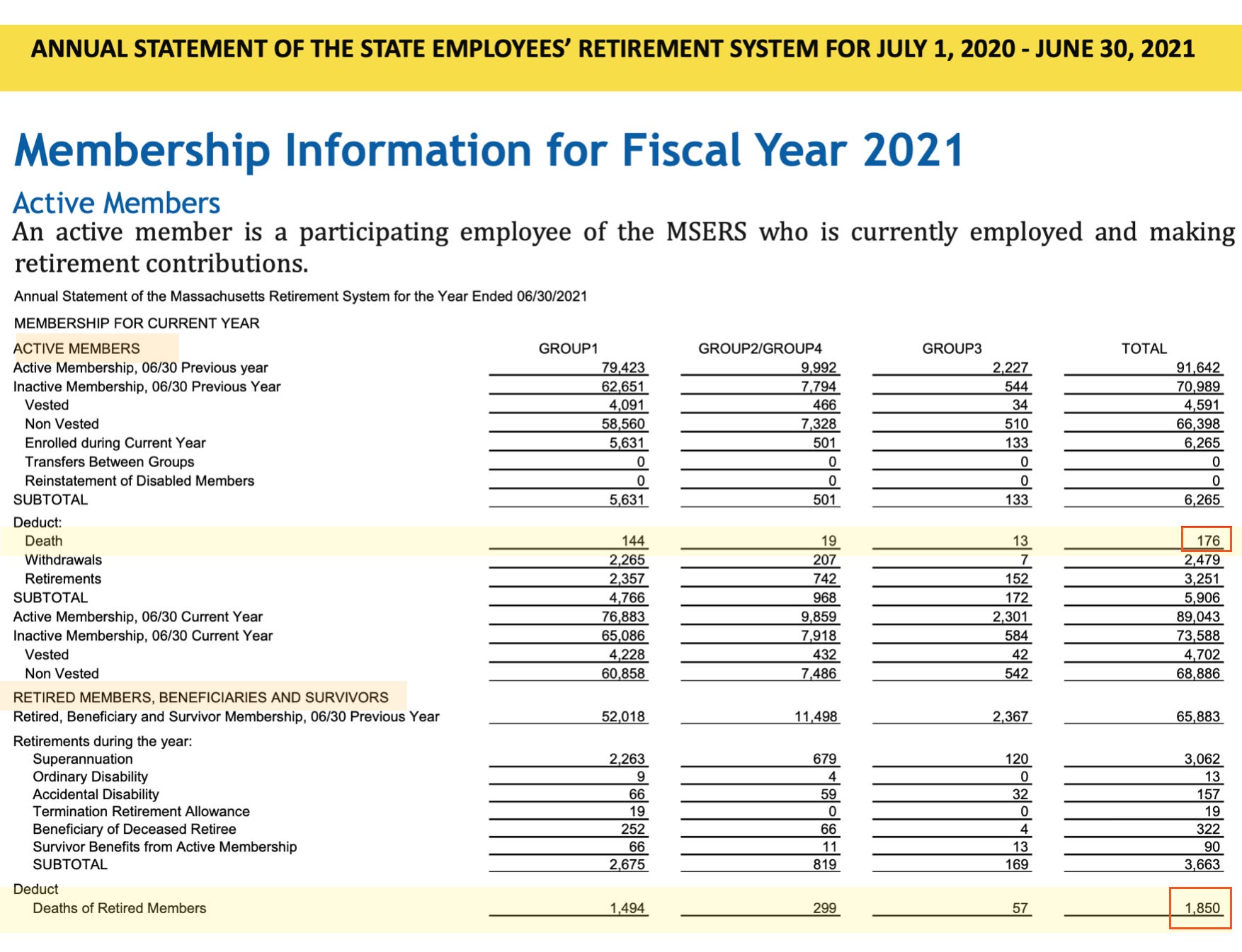
Here are the actual numbers from FY2020 and FY2021:
(page 11)
(page 12)
.
FY2020 total deaths in active and retired members: 1,861
FY2021 total deaths in active and retired members: 2,026
.
.
.
Well there you have it, my first stab at showing you what happened in 2020 and 2021 for the tandem of mortality and investments in a Massachusetts pension system. I’ll hopefully get better at it as I go. But my takeaway is that this is definitely a case of an incredible turnaround financially for a previously strapped pension system.
Good job in 2021 Massachusetts!
Sorry about the excess deaths of your public servants though.

.
.
.
*in case you have forgotten …
Pandemic Milestones:
January 20, 2020
-First covid case in the U.S.
December 11, 2020
-Pfizer Emergency Use Authorization
December 18, 2020
-Moderna Emergency Use Authorization
August 23, 2021
-Pfizer full FDA approval
December 2021 / January 2022
-CDC and FDA revise booster recommendations
-Rapid booster uptake
January 31, 2022
-Moderna full FDA approval
August 31, 2022
-FDA authorized Pfizer and Moderna’s new bivalent COVID booster vaccines
April 10, 2023
-Biden declares the end of the pandemic
.
.
.
The Kaiser Family Foundation, July 24, 2020: “Adults 65 and older account for 16% of the US population but 80% of COVID-19 deaths in the US.”
AARP, April 1, 2021: “95 percent of COVID-19 deaths in the U.S. have occurred among people who were 50 or older.”
Memo to financial investigators: Calculate how much money government and private insurers are saving, because they don’t have to keep paying for the long-term care of all the old people who are dying premature deaths in nursing homes. The money number will be staggering.
As of May 22, 2020, Forbes reported that, “…in the 43 states that currently report such figures, an astounding 42% of all COVID-19 deaths have taken place in nursing homes and assisted living facilities.”
Washington Post, May 18, 2020: “The World Health Organization said half of Europe’s covid-19 deaths occurred in such facilities.”
Headline of same Post article: “Canada’s nursing home crisis: 81 percent of coronavirus deaths [in the country] are in long-term care facilities.”
The Guardian, April 13, 2020: “About half of all Covid-19 deaths appear to be happening in care homes in some European countries…Snapshot data from varying official sources shows that in Italy, Spain, France, Ireland and Belgium between 42% and 57% of deaths from the virus have been happening in homes, according to the report by academics based at the London School of Economics (LSE).”
To an astounding extent, COVID-19 was a nursing home assault. Mass murder by cruelty. The elderly in nursing homes were primary targets. Getting them to die earlier is the tactic, in order to pump up the fake covid mortality numbers and save billions in unfunded liabilities.
===================
This report was May 28, 2020:
"The data shows that more than 80 long-term-care facilities in Massachusetts had recorded at least 20 coronavirus-related deaths.
The Leavitt Family Jewish Home in Longmeadow held the highest coronavirus-related death toll with 66, followed by Mary Immaculate Nursing/Restorative Center in Lawrence with 64 and the Courtyard Nursing Care Center in Medford with 60.
Out of the 6,547 deaths reported in Massachusetts as of Wednesday, 4,041 were residents of long-term care facilities, state data shows."
https://www.nbcboston.com/news/coronavirus/startling-data-released-on-coronavirus-cases-at-massachusetts-nursing-homes/2132468/
This is brutally clear and clearly brutal. Your focus is sharp and direct, and this case may be your most concise and impactful example to date - really well done, thanks.