
The Last Plantation
RHODE ISLAND ... 2020 Early Spring Deaths, Astronomical Investment Gains in 2021 & Unexpected Mortality After the Vaccine Rollout


.
.
.
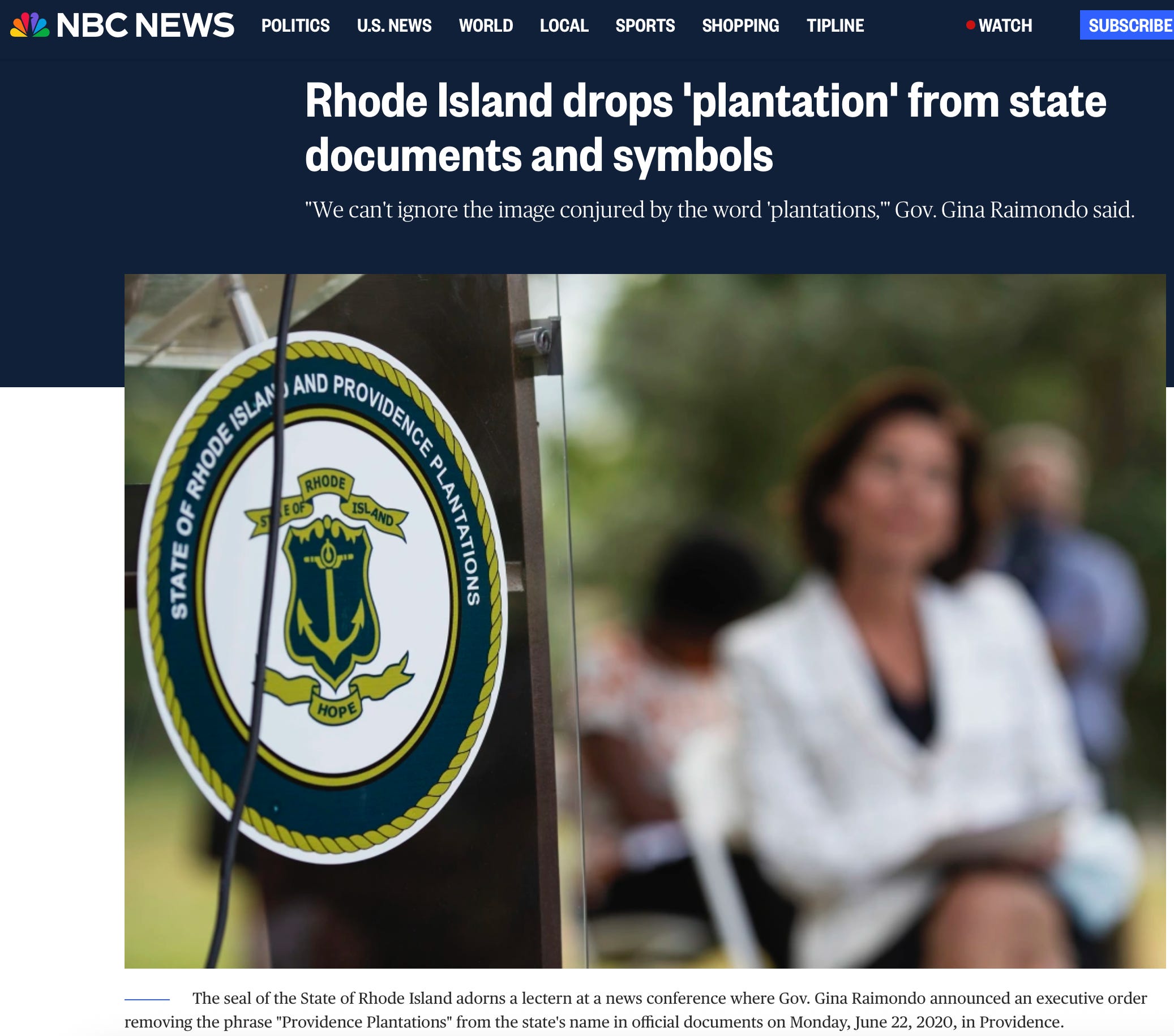
June 23, 2020
“… In its most narrow definition, the word refers to a “group of plants and especially trees under cultivation” or “a settlement in a new country or region,” according to Merriam-Webster’s dictionary.
But the more recognized secondary interpretation of “plantation,” as an “an agricultural estate usually worked by resident labor,” has more disturbing overtones ...”
.
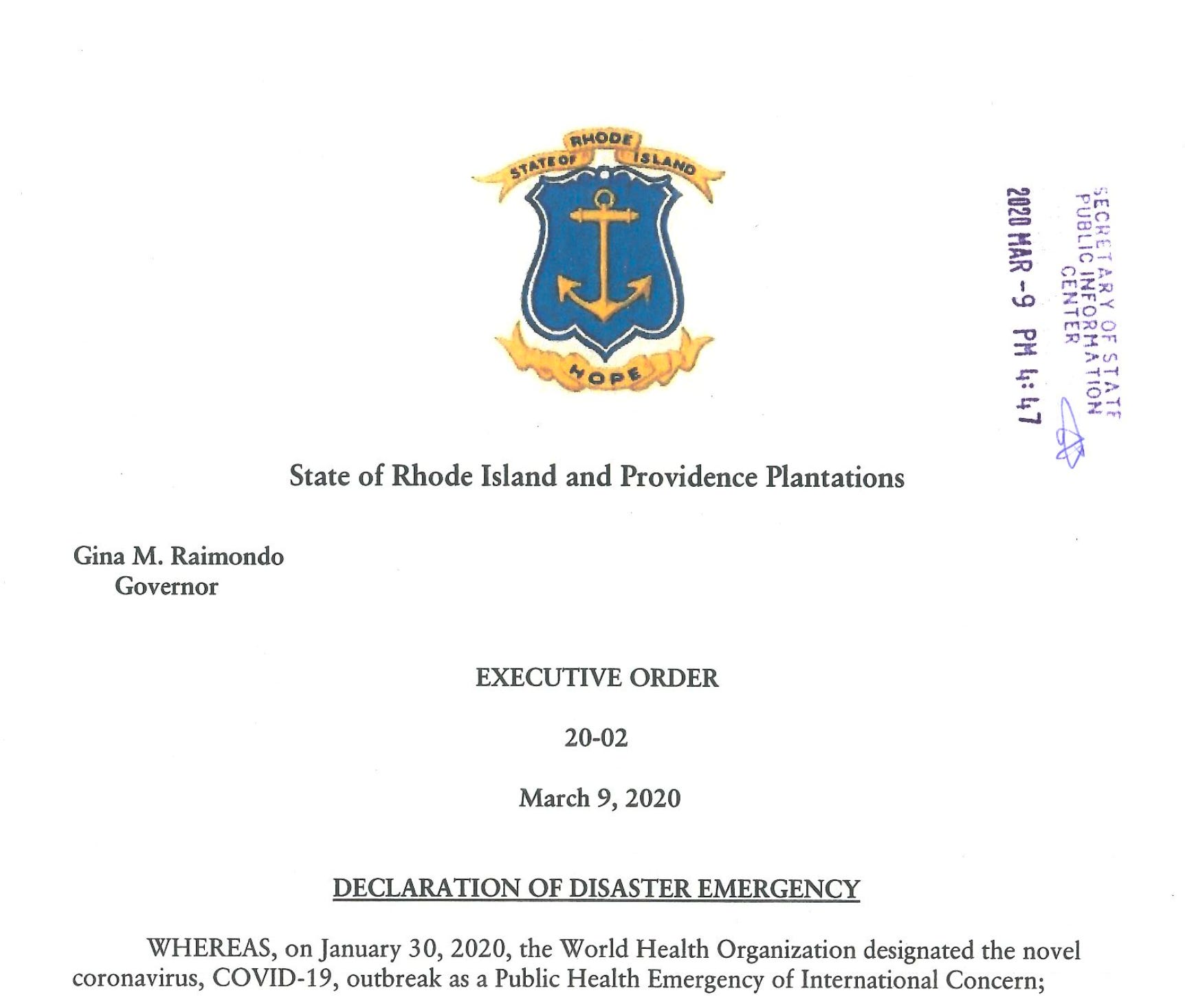
So on March 9, 2020 when the declaration of emergency was made in Rhode Island, it was still a plantation. But just a few months later in June, it was no longer.
Magic.
.
.
.
Yes the definition of something is very important.
.
.
.
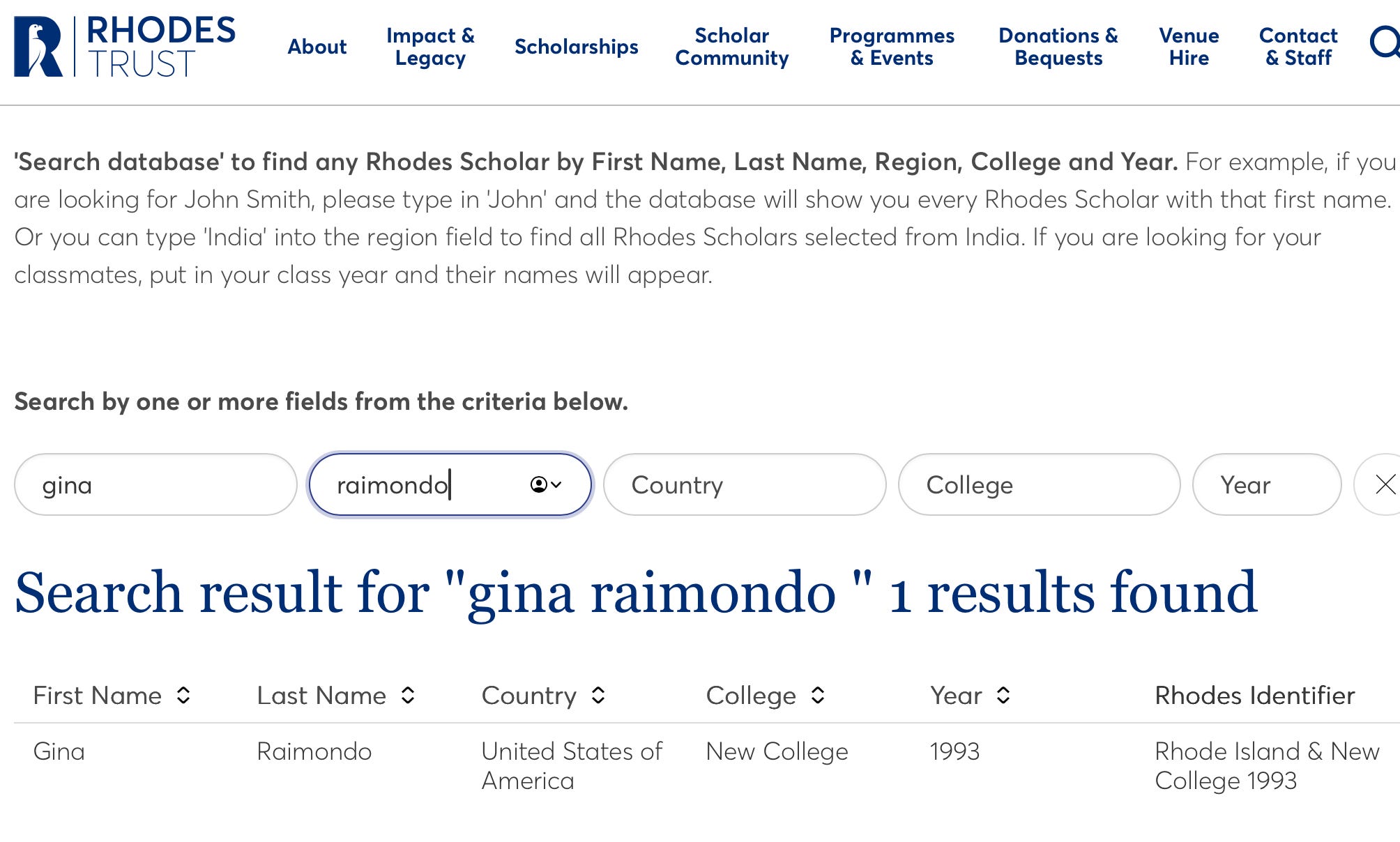
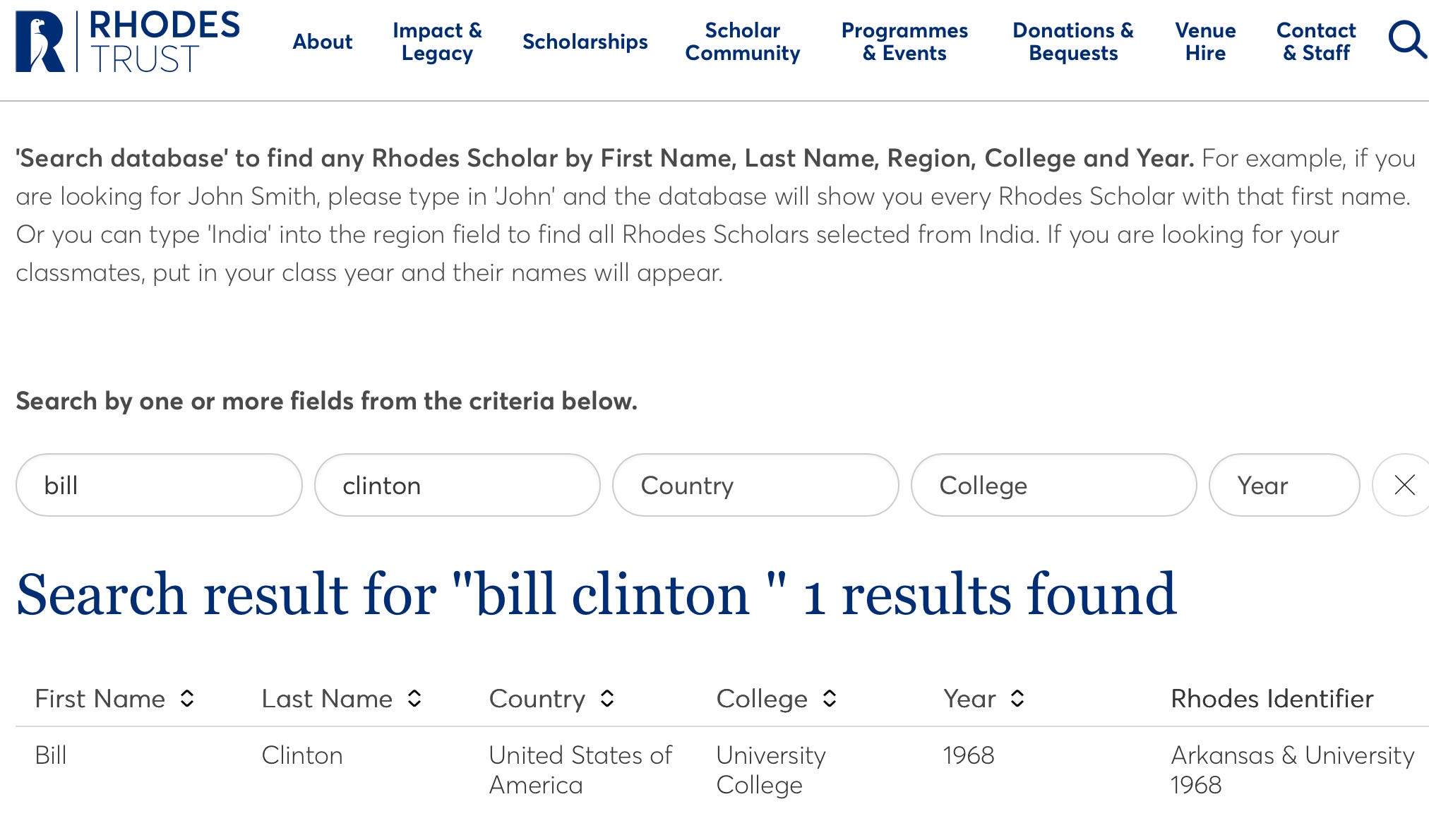
Did you know that the Governor of Rhode Island, the blurry person in the background in the above picture - Gina Raimondo, was a Rhodes Scholar?
Kinda weird, huh?
And no, it is just a coincidence. There is no connection between Cecil Rhodes and the state of Rhode Island.
.
.
.
.
… speaking of former Governors, Rhodes Scholars and definitions …
.
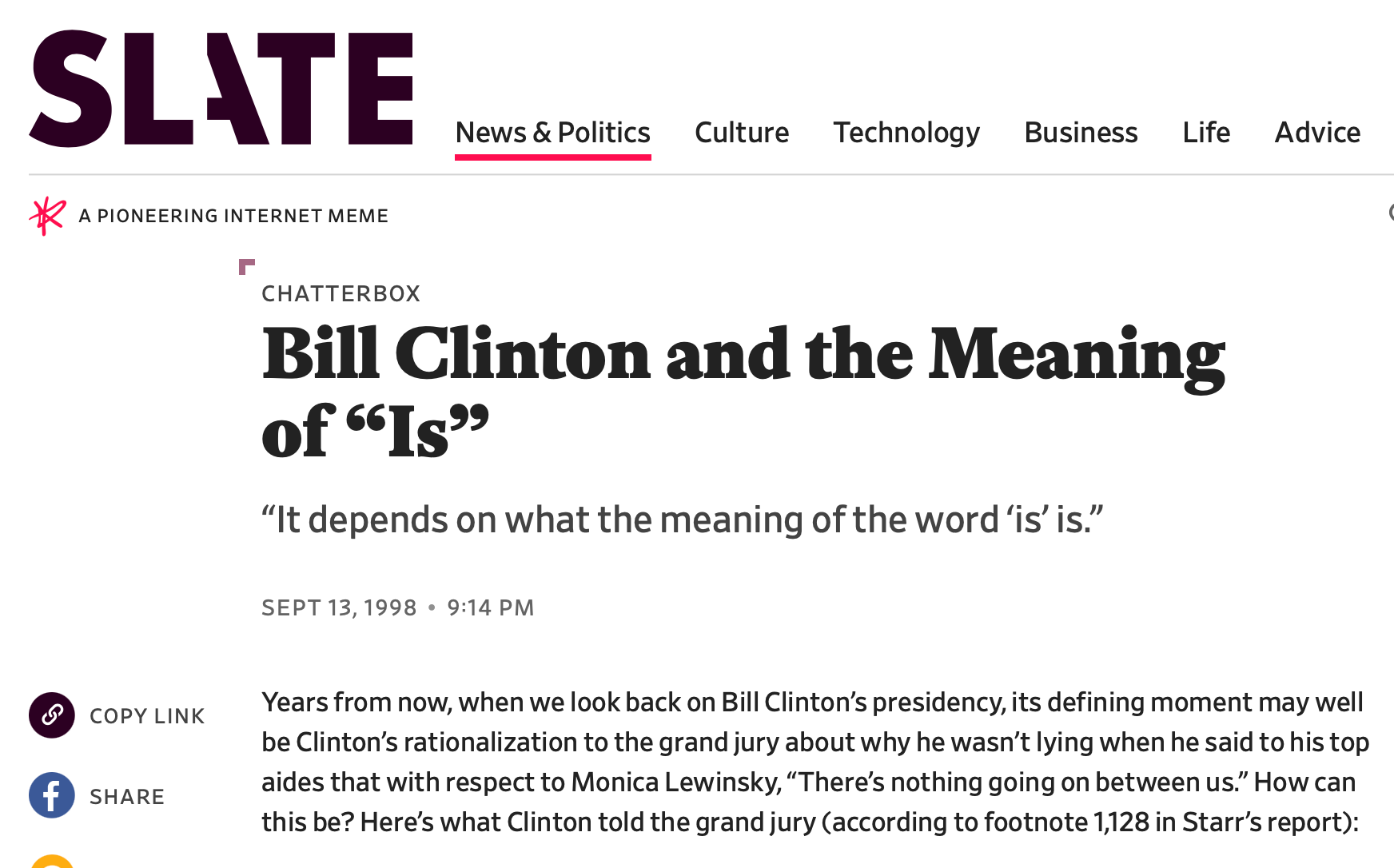
September 13, 1998
“It depends on what the meaning of the word ‘is’ is.”
.
.
.
.
.
.
Did anything else get its definition changed during the pandemic?
.
.
.
(Yeah, if you are here reading this, then you know what I am talking about.)
.
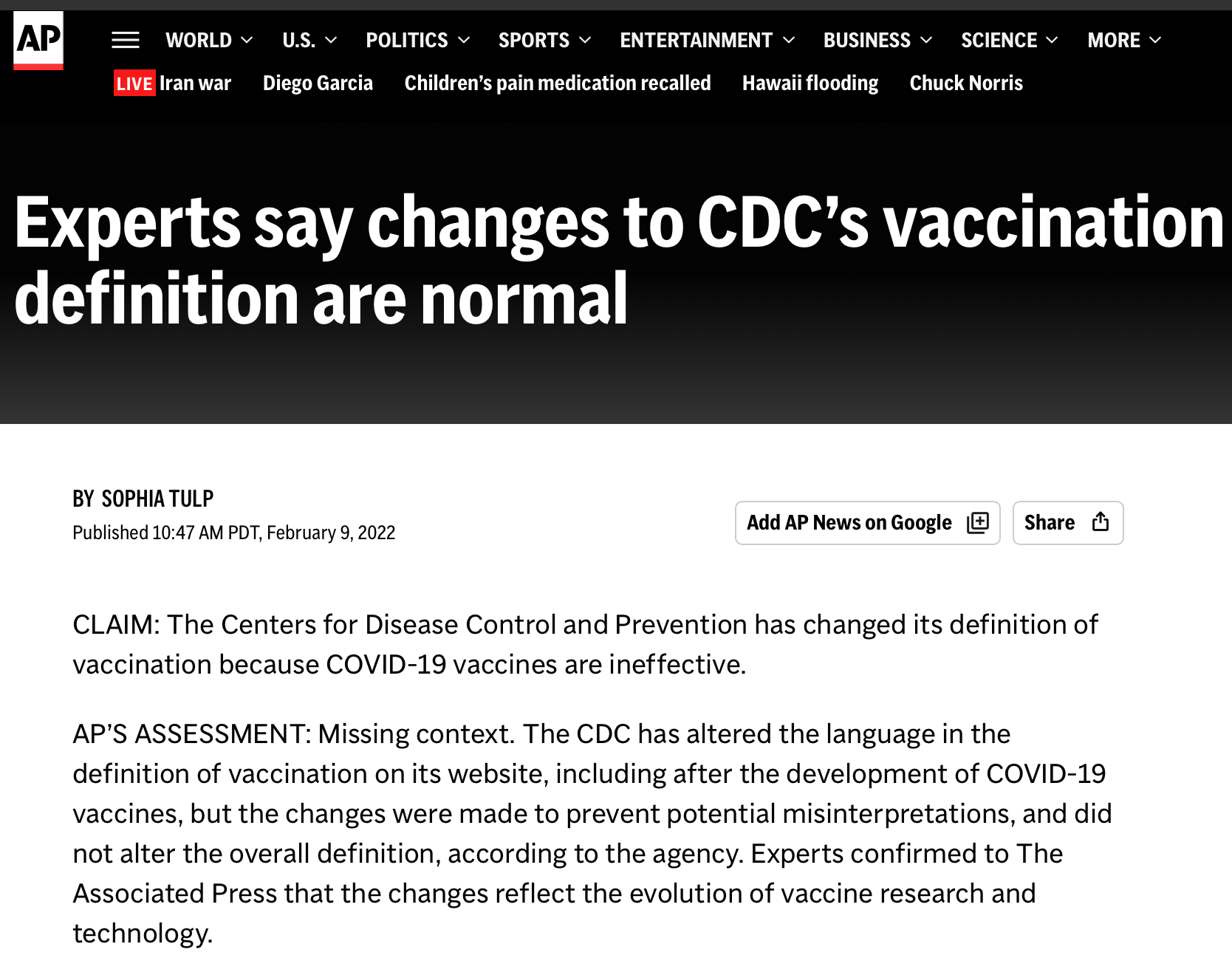
February 9, 2022
“… The CDC has altered the language in the definition of vaccination on its website, including after the development of COVID-19 vaccines, but the changes were made to prevent potential misinterpretations, and did not alter the overall definition, according to the agency. Experts confirmed to The Associated Press that the changes reflect the evolution of vaccine research and technology …”
.

So at the risk of trying some of my long time readers’ patience, I will once again say what this Ghost Bomb (?#?) series is all about for any newcomers:
In the spring of 2020 there were some places in this country that saw very unseasonal increased mortality.
In the following year (fiscal year 2021) many of these same places had huge windfalls in their public employee pension plans due to historic investment gains.
These investment gains were happening simultaneously with additional increased member mortality into 2021 and beyond.
A look back at the solvency of these same pension plans in 2019 shows that many of these locations that had the strange 2020 spring death surge were in pretty bad financial shape right before the pandemic hit.
Previously I pointed out that in those 14 U.S. state locations (*plus Wash. D.C.*) that saw this big spring mortality spike, there were six that also showed up in the bottom ten of the worst pensions of 2019.
Since I have dubbed that April/May death surge the “Ghost Bomb,” these places were called the Ghost Bomb Six.
.
But …
… I thought I was pretty clever when I came up with the idea for my Ghost Bomb Six series. But the problem with giving something a number is that you may turn out to be wrong. Quantities can change depending on how you define things … what you allow in and what you keep out.
(Hmmm, that kinda sounds like an immune system.)
Anyway, if you read my last post, then you know that I had to abandon the number six for this strange group I am trying to paint a picture of.
You see, my original sextuplets got a sibling when I found out that Connecticut was a direct relative. What then to do with the name of this assortment I am compiling?
Ghost Bomb Gang?
Ghost Bomb Mob?
At least those are open ended. But really, I am starting to realize that every location on my total Ghost Bomb list may eventually qualify if I just keep digging around. It really is like an onion!
.
Well as you can probably guess by all that gum flapping, and by the subtitle to this post, I have yet another “Ghost Bomb / Bad Pension” location to add. If you are keeping track, we are up to 8 now.
.
.
.
Rhode Island
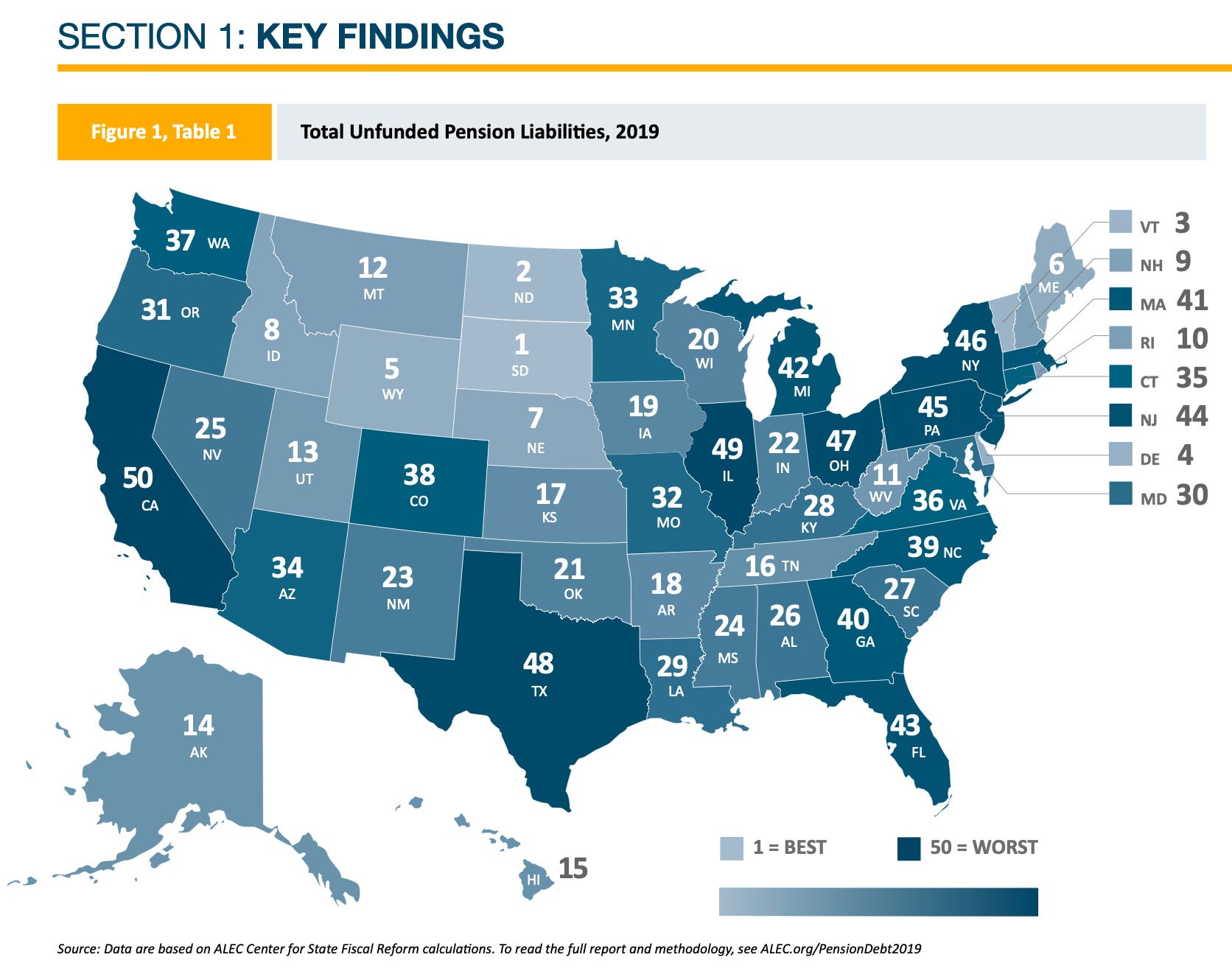
ALEC Pension System Rank: 10
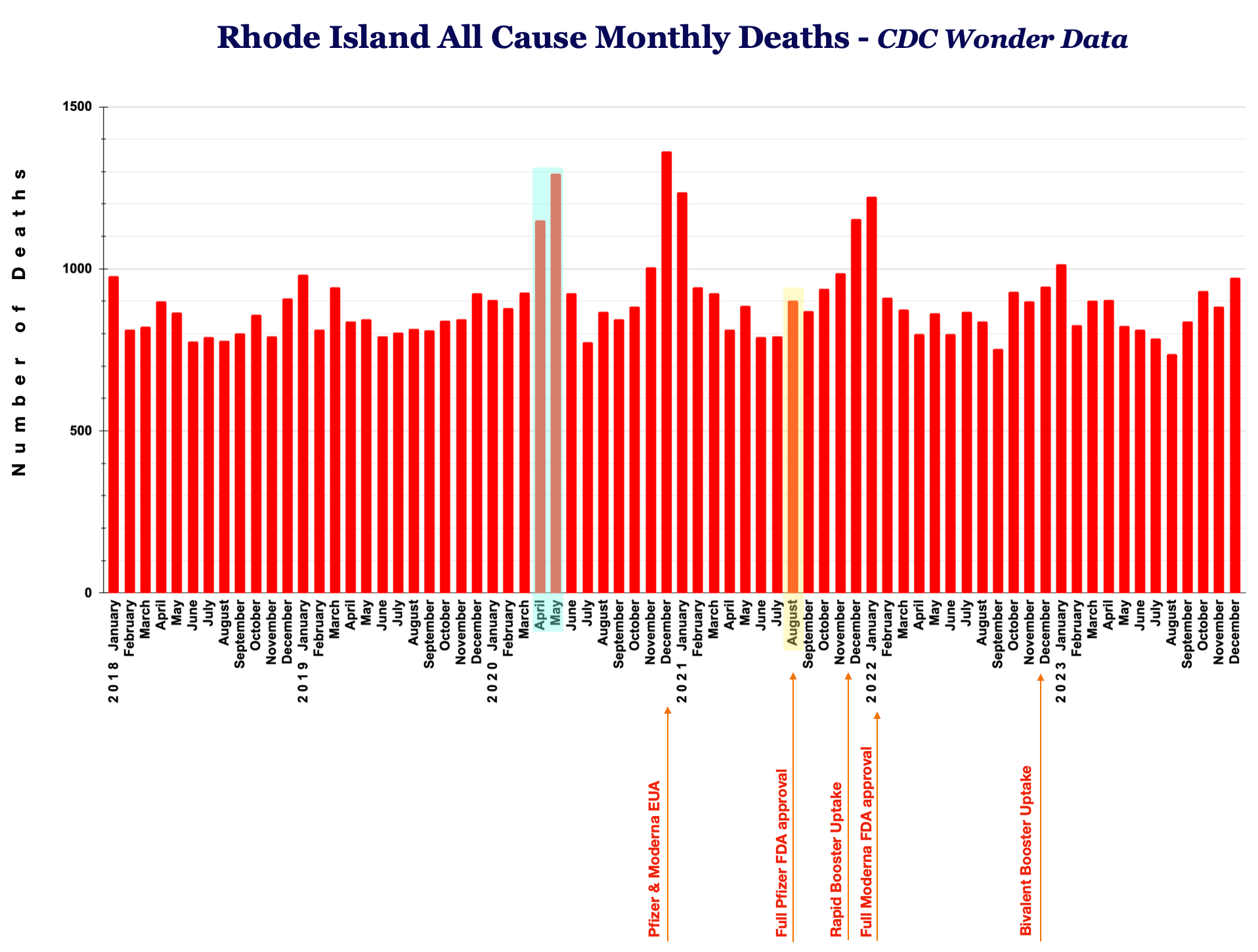
(Ghost Bomb in blue highlight)
.
Wait a second.
Admission into this group … whatever you want to call it now … is based on the Ghost Bomb location having a really bad pension system, right?. That rank there says #10. That means top ten, what gives?
Yes it is, according to that one source we talked about last time - ALEC. But as we also explored last time, there are other methodologies and ranking systems out there. Could a different look actually catapult poor little Rhode Island into the bottom ten of pensions around the years of 2019 & 2020?
.
One way to start examining that possibility is to go back to this report from the Pew Charitable Trusts from 2022 that lists the funded ratio for all the state’s pensions as of 2020. We looked at that source last time - and that is how we found out how poorly Connecticut actually was doing with its not so good 43% funded ratio. Rhode Island is slightly better than Connecticut on that list, but with its 54% funded ratio it is definitely in the bottom ten.

.
Well while we are at it, let’s just get the bottom ten in order from that Pew list:
Illinois … 37%
New Jersey … 38%
Connecticut … 43%
Kentucky … 45%
New Mexico … 50%
South Carolina … 52%
Hawaii … 53%
Rhode Island … 54%
North Dakota … 55%
Massachussetts … 56%
.
Well that’s a little different than the ALEC map. Rhode Island goes from 10th best to 8th worst!
.
.
But just to round this out, let’s consult my new “best friend forever”, ChatGPT:
“Around 2019–2020, Rhode Island’s public pension system ranked among the **bottom ten U.S. states by funded ratio—typically about the 5th to 8th worst—according to analyses based on data from the The Pew Charitable Trusts and the Federal Reserve Z.1 Financial Accounts. However, the 2019 report by the American Legislative Exchange Council ranked Rhode Island 10th best, reflecting a different methodology that evaluates pension liabilities using a risk-free discount rate and emphasizes long-term structural reforms rather than current funding levels.”
.
It really does depend on who you talk to!
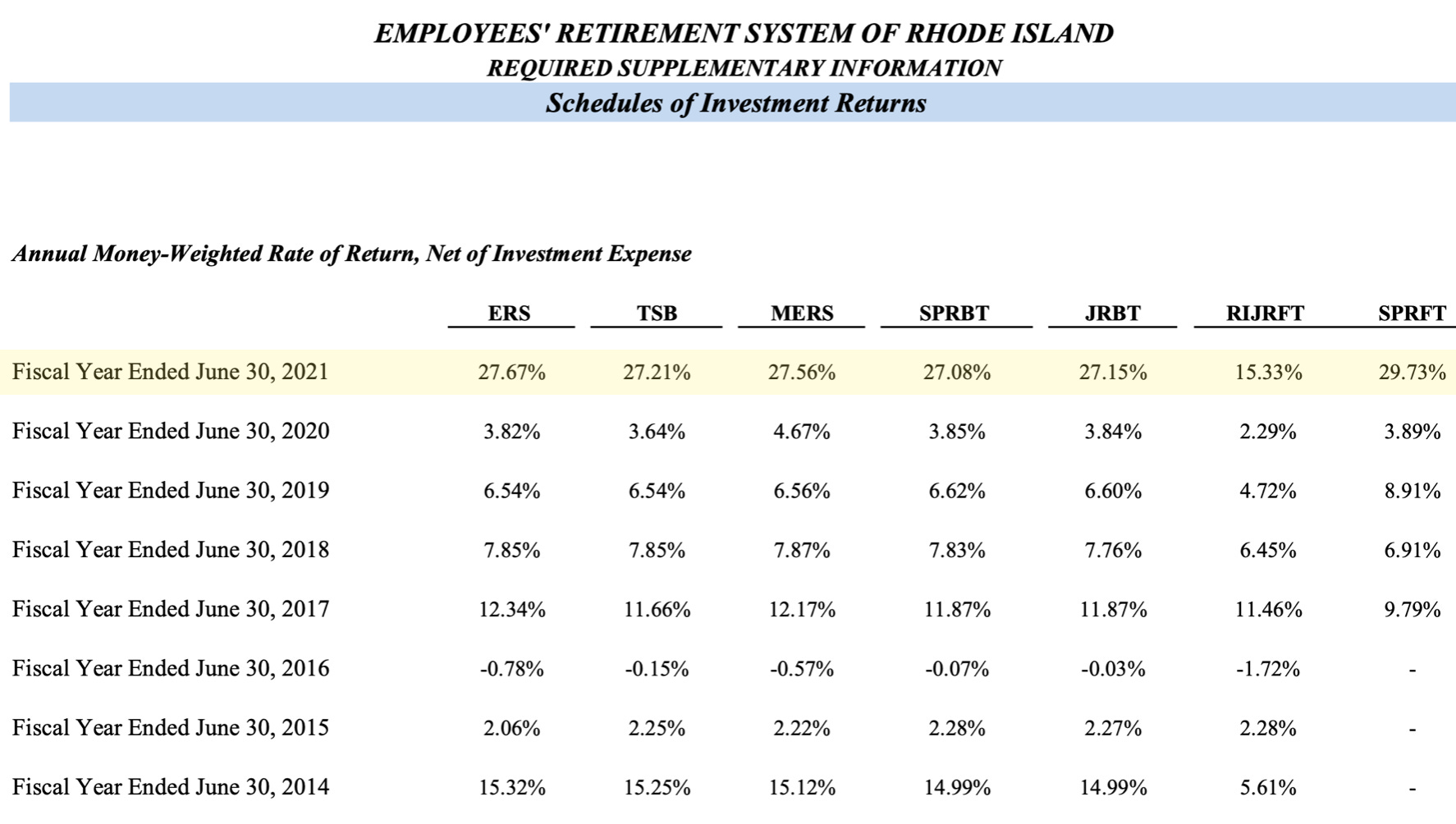
The Big Payday

page 62 (Schedule of Investment Returns)
.
.
.
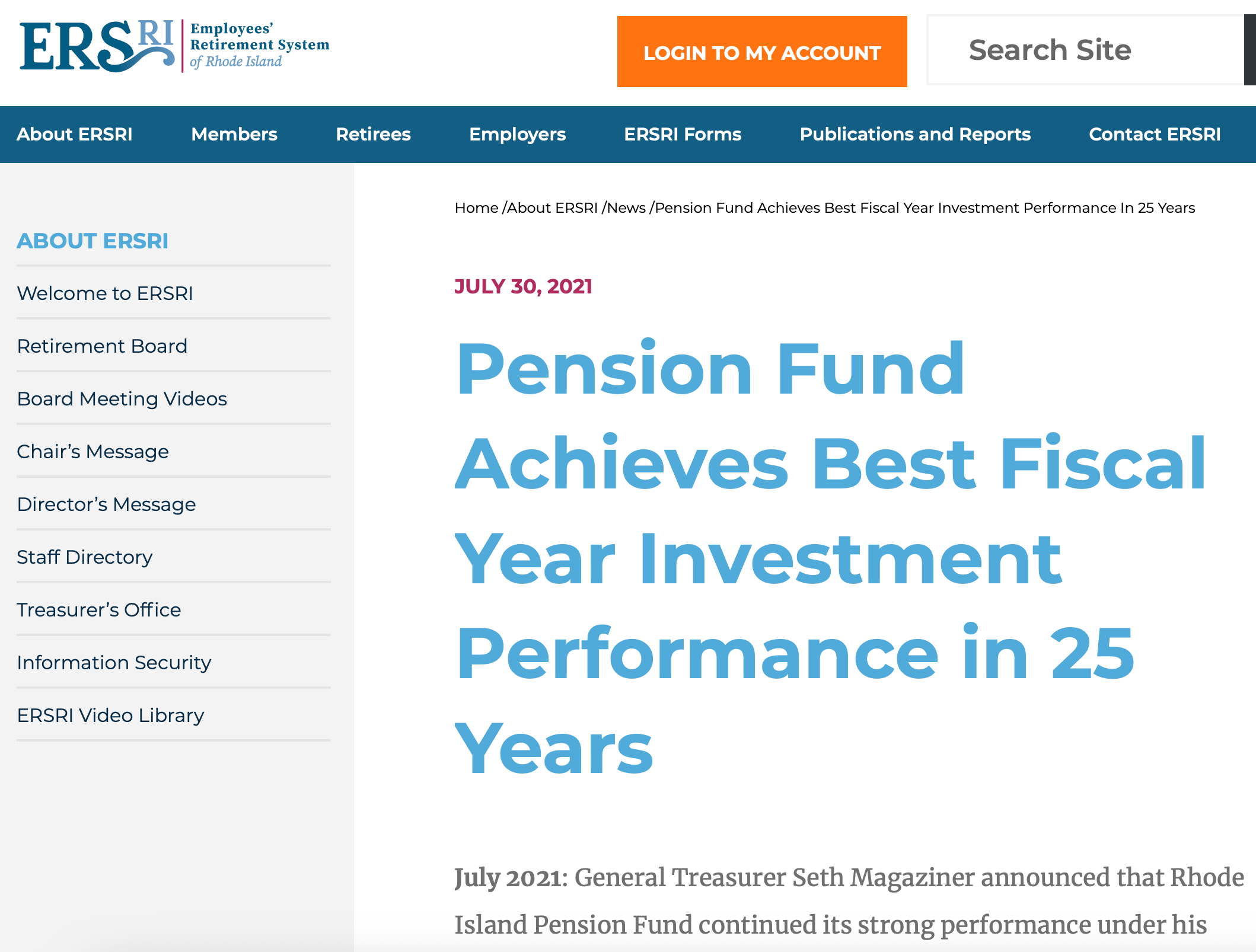
July 30, 2021
“… General Treasurer Seth Magaziner announced that Rhode Island Pension Fund continued its strong performance under his “Back-to-Basics” investment strategy, closing the Fiscal Year ended June 30, 2021, with an all-time high investment gain of more than $2.2 billion for a total value of more than $10.3 billion in assets.
“As General Treasurer, my top priority is delivering economic growth and financial security for all Rhode Islanders,” said General Treasurer Seth Magaziner. “’Back-to-Basics’ works- this year the pension system has reached an all-time high, we have achieved our highest annual return in 25 years, and retirees in the system are also receiving a much-needed cost of living adjustment.”
During the Fiscal Year, the Pension Fund returned 25.58% …”
.
“All-time high.”
.
Now that’s the way to turn it around! Good job Rhode Island.
.
Nice!

Unexpected Mortality

I think here instead of painstakingly reproducing the many tables that are to be found in the annual reports, I’m just going to ask you to take my word for it that there are signs of elevated mortality in the pension system after 2020.
But here is a graph from an older post of the members removed that is a composite of all the many groups:
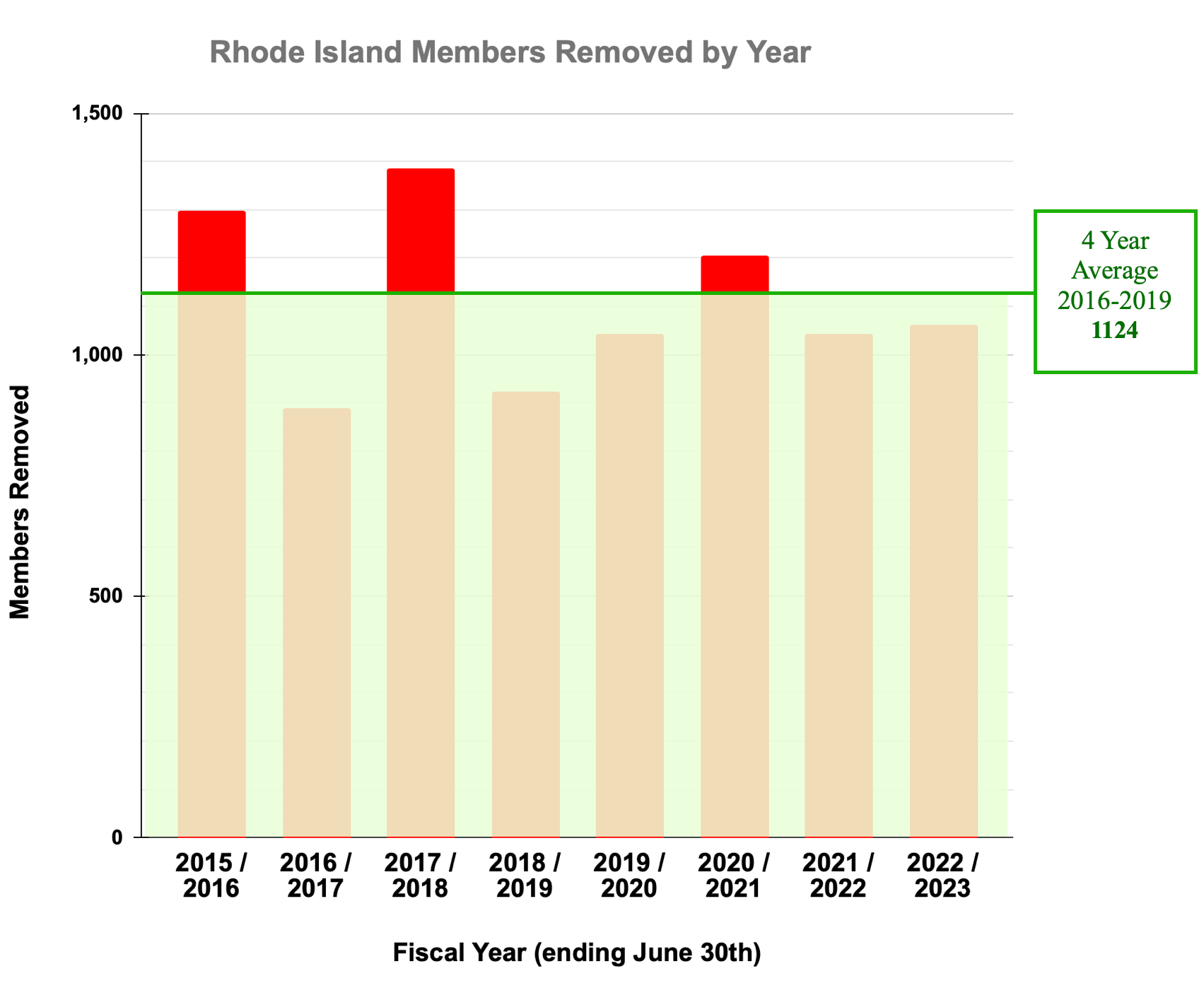
***I have since done some digging about these numbers and it is almost assured that those large spikes in removals for 2016 and 2018 are due to structural overhauls of the pension system. If so, then fiscal year 2021 stand out.
.
.
.
This next graph is also from that older post - it is showing us the death refunds. Remember that this is what would be an indication of mortality in the still working members.
.
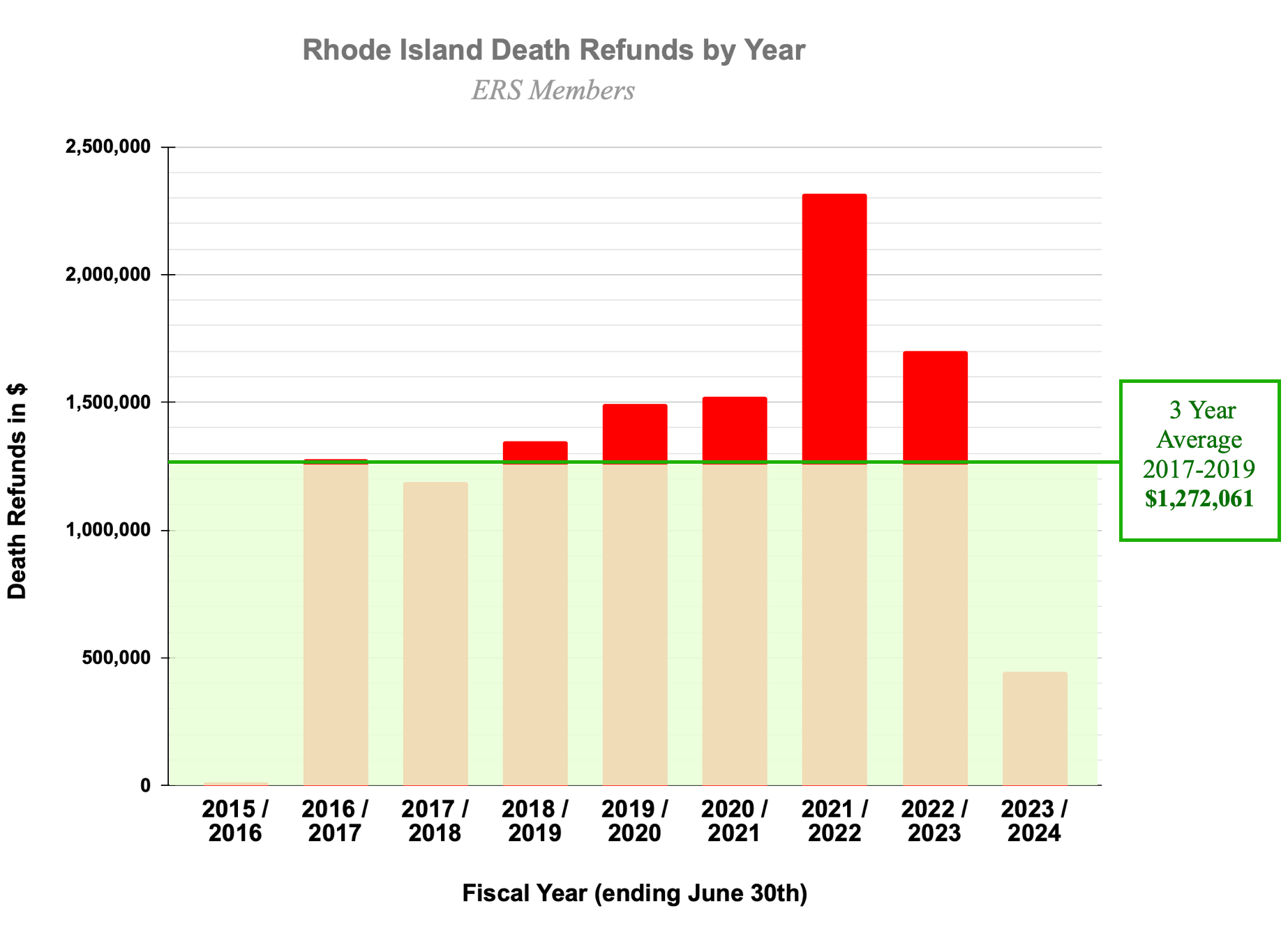
Fiscal year 2022!
… after the vaccine rollout.
Now what did our Ghost Bomb Governor do after taking care of things in Rhode Island?
.
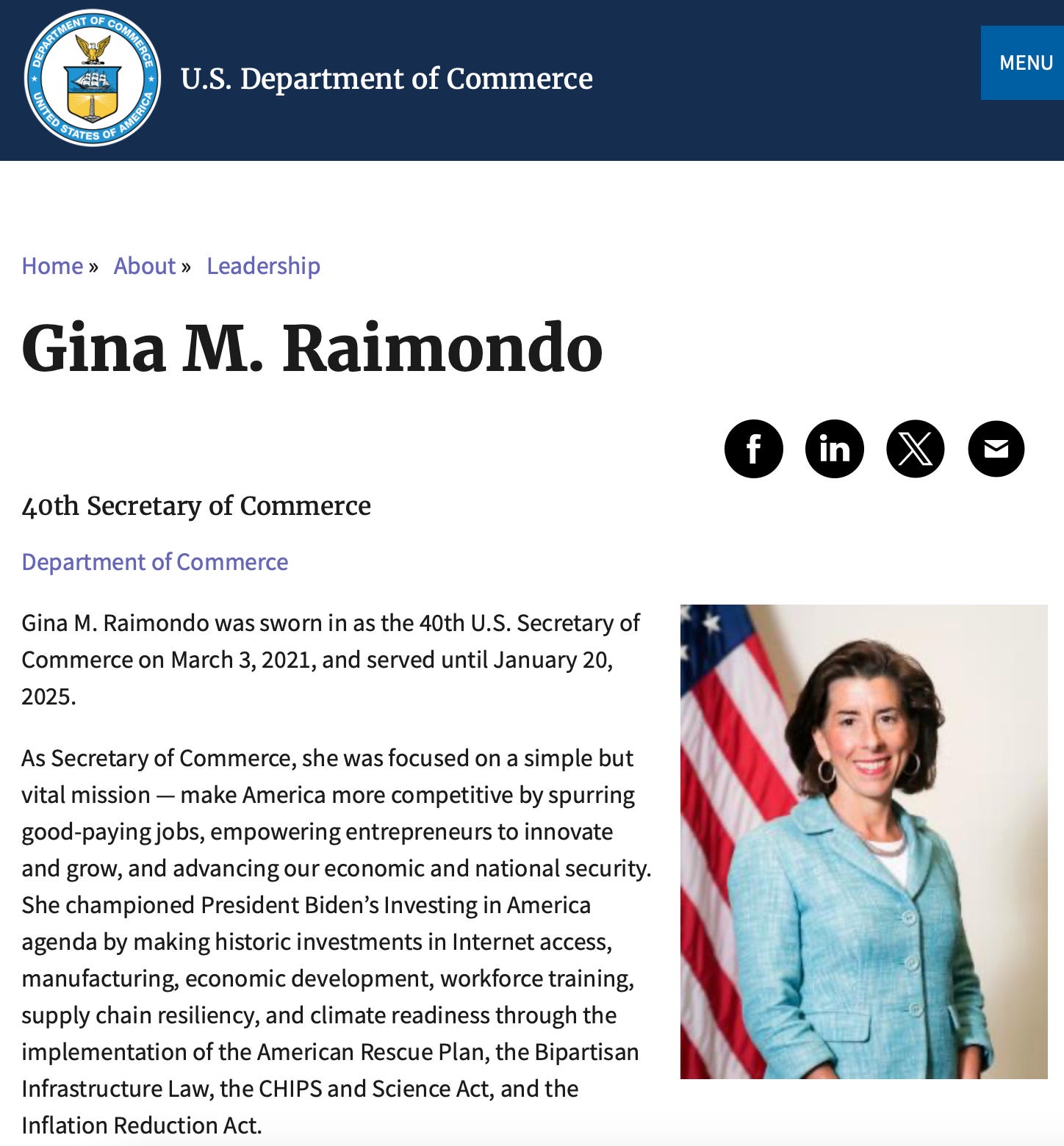
“Gina M. Raimondo was sworn in as the 40th U.S. Secretary of Commerce on March 3, 2021, and served until January 20, 2025.”
.
.
.
So, kind of like our friend from Pennsylvania, Rachel Levine, this champion of the people of Rhode Island went on to the big game in Washington D.C.
.
Secretary of Commerce under Joe Biden.
.
.
.
Now I would like to circle back to the whole topic of definitions …
.
.
.
Do you know what one of the agencies is that the Commerce Department oversees?
.
NIST (National Institute of Standards and Technology)
.
What the hell does that have to do with anything?
.
Well it just happens to be the place where a very behind the scenes, and a very important little detail of the whole pandemic was put together. You’ve heard of the PCR test? Many folks here in this echo chamber of covid contrarians might say it was the key to the whole operation … you know, the plandemic. Without that test telling everyone that they had covid (even asymptomatic healthy people!) there wouldn't have been the waves, surges and explosions that scared the shit out of everyone.
It seems that in the early days of covid there were no standards for running these tests. Think of it like a scale, for weights and measures. Anybody could have a scale and you would just have to trust them that they knew what an ounce was when they were weighing your gold nuggets.

.
The same idea is at play with the PCR tests. What is the calibration that everyone will agree on?
Guess who stepped right in and provided that?
That’s right …
NIST.
.
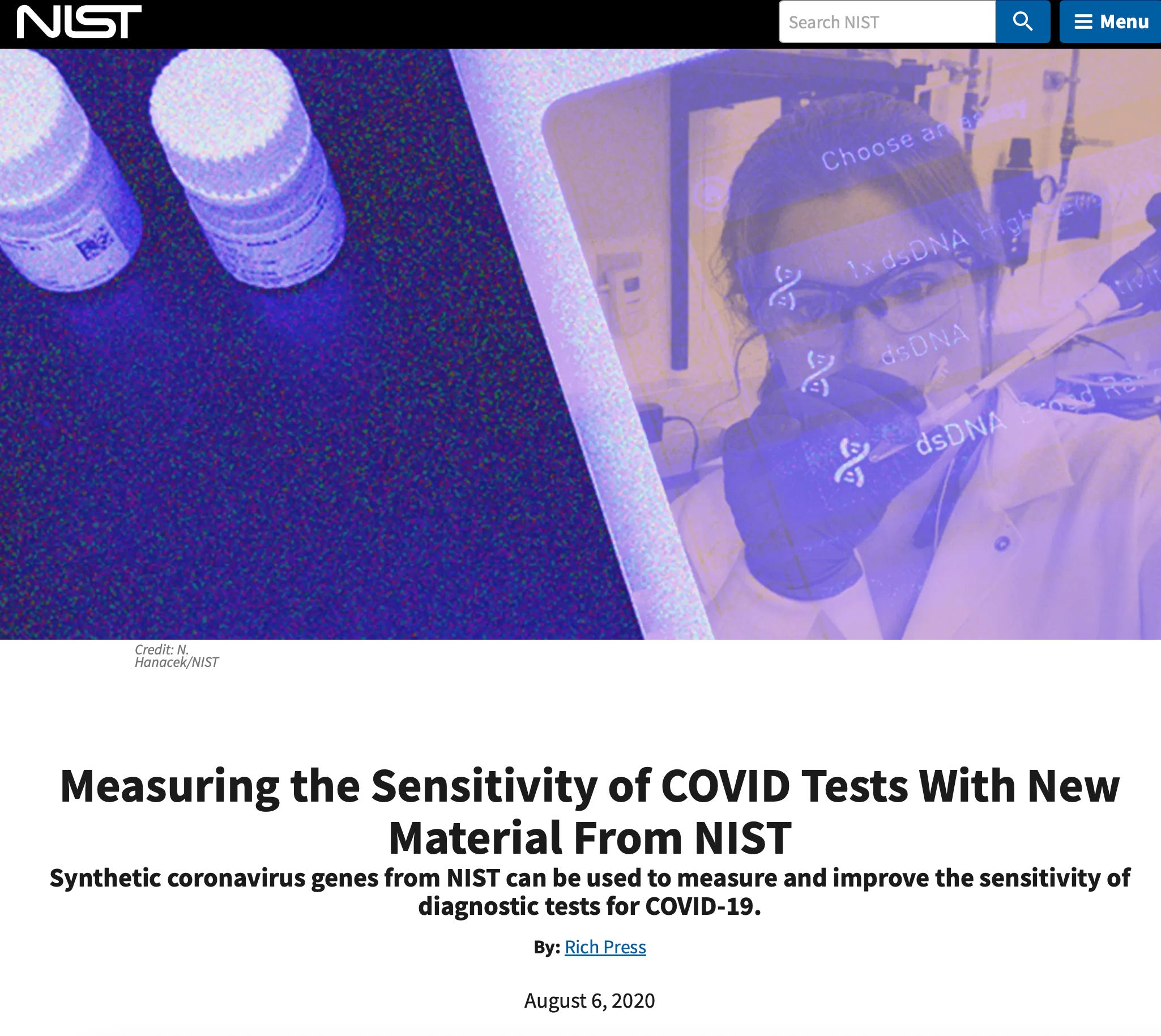
August 6, 2020
“…Researchers at the National Institute of Standards and Technology (NIST) have produced synthetic gene fragments from SARS-CoV-2, the virus that causes COVID-19. This material, which is non-infectious and safe to handle, can help manufacturers produce more accurate and reliable diagnostic tests for the disease …
“Having better data on test sensitivity will help us understand how often tests for COVID-19 produce a negative result for people that are actually infected,” said NIST research scientist Megan Cleveland.
To help with this, Cleveland and her colleagues at NIST have produced synthetic fragments of the virus’s genes, which are written in RNA, a molecule that encodes information much like DNA. Synthesizing RNA is not new or groundbreaking. What makes this material notable is that NIST scientists have measured very carefully how many fragments are in each vial they ship.Using this material, researchers can measure sensitivity by running tests against known quantities of viral RNA. They can also use it to develop more sensitive tests or new types of tests that are faster or easier to administer …”
.
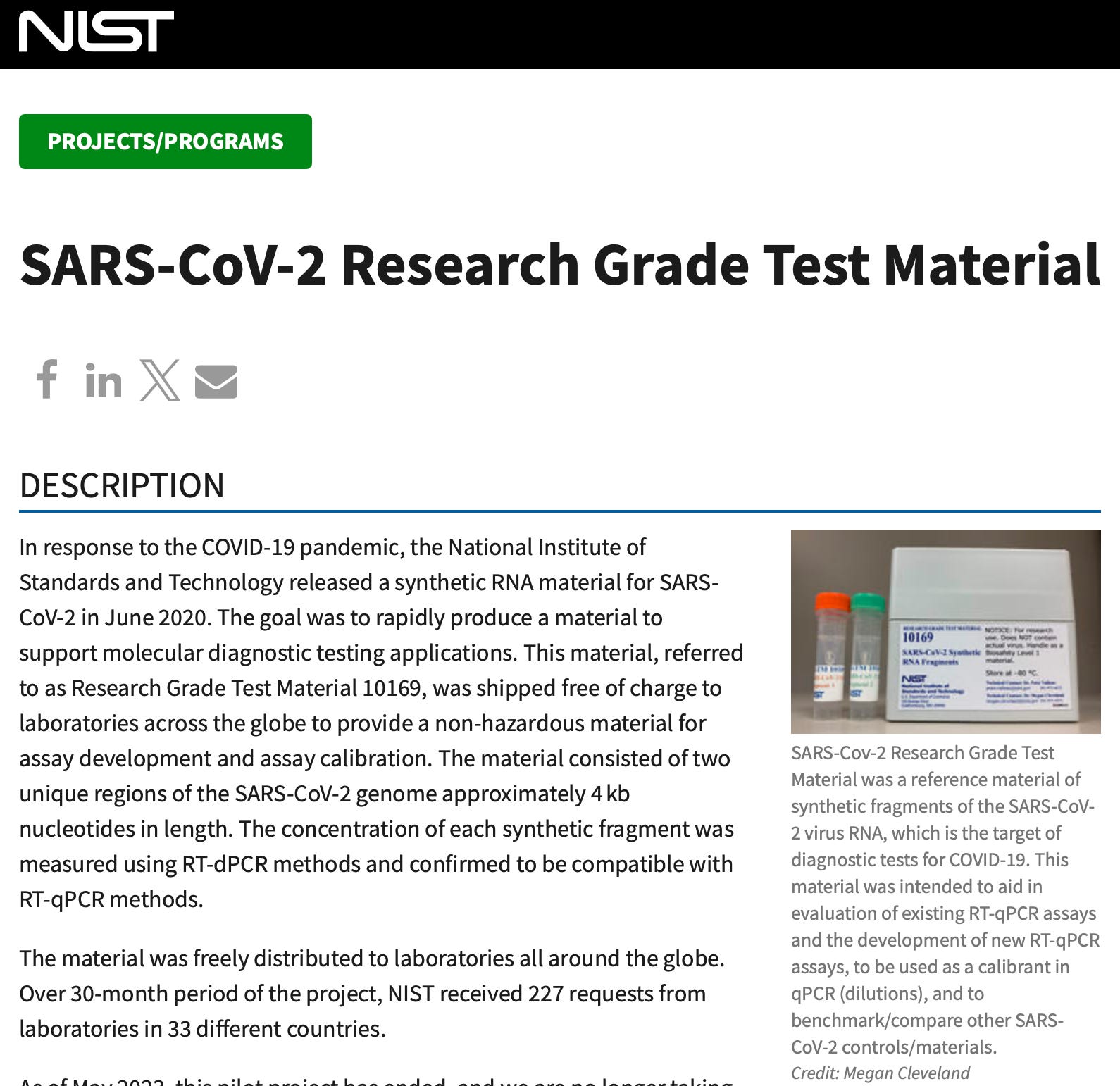
NIST produced Research Grade Test Material 10169 and it was provided free of charge to anyone that asked for it … anywhere in the world, not just the U.S.
.
.
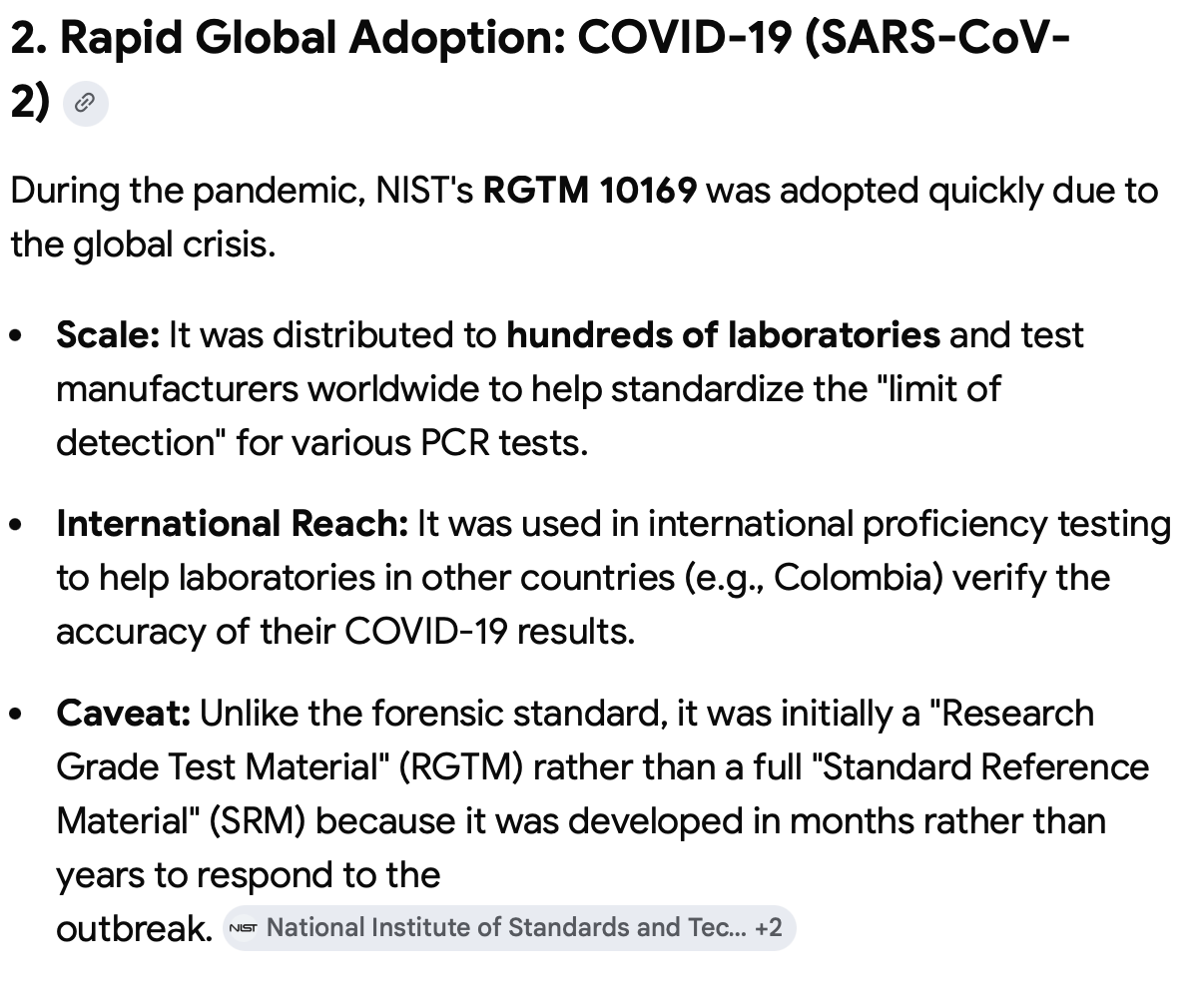
“During the pandemic, NIST’s RGTM 10169 was adopted quickly due to the global crisis.
Scale: It was distributed to hundreds of laboratories and test manufacturers worldwide to help standardize the “limit of detection” for various PCR tests.
International Reach: It was used in international proficiency testing to help laboratories in other countries (e.g., Colombia) verify the accuracy of their COVID-19 results.
Caveat: Unlike the forensic standard, it was initially a “Research Grade Test Material” (RGTM) rather than a full “Standard Reference Material” (SRM) because it was developed in months rather than years to respond to the outbreak.”
Google AI
.
And when those deadly virus variants (Delta and Omicron) showed up later in the years of Joe Biden’s presidency, our girl Gina was right there to make sure that NIST got those new calibrations sent out free of charge.
.
.
.
And you know, Gina cut her teeth on getting the testing done right back in Rhode Island:
My question to ChatGPT:
“how aggressively the state tested compared with most countries ... tell me about that”
.
During 2020–2021, Rhode Island became notable for having one of the highest COVID-19 testing rates in the world. That aggressive testing policy is a big reason the state sometimes appeared at the top of global charts for COVID-19 cases per capita.
Here’s what made Rhode Island unusual.
1. Massive testing relative to population
Rhode Island’s population is only about 1.1 million, but the state ran extremely large testing programs.
At several points in 2020 and early 2021:
Rhode Island performed more tests per capita than most U.S. states.
Its per-capita testing rate exceeded many entire countries.
That meant the state detected many mild or asymptomatic infections that places with limited testing simply never recorded.
2. State-run free testing sites
The state government set up widespread testing through the Rhode Island Department of Health.
Key features:
Free PCR tests available to anyone, even without symptoms.
Large drive-through testing sites across the state.
Dedicated testing programs for schools, nursing homes, and workplaces.
Testing was done with partners like CVS Health, whose corporate headquarters are actually located in Woonsocket, Rhode Island.
3. Frequent screening programs
Rhode Island ran routine screening programs that many places didn’t:
K-12 schools regularly tested students and staff.
Universities conducted repeated surveillance testing.
Nursing homes tested workers multiple times per week.
This meant infections were detected earlier and more often.
4. Small state = easier logistics
Because Rhode Island is geographically small:
Testing sites were usually within a short drive for most residents.
The state could coordinate centralized public-health programs more easily than larger states.
That allowed faster rollout of large testing operations.
5. Why this affected global rankings
When charts compared cases per 100,000 people, Rhode Island sometimes ranked at the top because:
It found more cases due to extensive testing.
Many countries were under-testing, especially early in the pandemic.
Rhode Island reported data daily and transparently, while some places had delays.
So the high ranking partly reflected measurement differences, not just worse spread.
✅ In short:
Rhode Island’s aggressive testing meant it likely captured a larger share of actual infections than many places. That helped public-health officials track outbreaks, but it also made the state look unusually severe in global case-rate comparisons.
.
.
.
I almost forgot to tell you what Gina went on to do after Joe Biden was done with her talents.
.

.
.
.
The very definition of a “Distinguished Fellow”!
.
.
.
csofand— Always glad to see your posts. I just finished transcribing this 2021 interview with a UK funeral director and I thought I'd share it here since he too talks about some remarkable patterns. (I looked up the resistancegb.org page, it seems it's down)
"Another Funeral Director Speaks out."
Daveswildcamping, November 6, 2021
https://rumble.com/votbyz-another-funeral-director-speaks-out..html
TRANSCRIPT
TRANSCRIBER'S NOTE
- The unidentified male interviewer remains off-camera.
- Wesley addresses the camera directly.
TEXT ON SCREEN:
2nd November 2021. London
Outside: 2021 Annual Sowerby Lecture: Professor Neil Ferguson
King's College London
RESISTANCE BG
WESLEY: My name's Wesley. I've been a funeral director for over 3 years. So I have a bit of knowledge about what was going before this pandemic started and what's going on right now.
So there was a spike back in March, April last year, and after that it considerably calmed down. It was all hyped from what I was seeing. And they shut down these extra storage units that they had in the summer and they never opened them up again.
INTERVIEWER: Did they use them in the first place?
WESLEY: Yes, but I don't think— I couldn't tell you how many bodies were in there, but they soon went back down. They were only up for a couple months.
INTERVIEWER: So the only time you saw a spike was right at the start of this whole thing?
WESLEY: [Nods head, yes]
INTERVIEWER: And since there's been next to nothing?
WESLEY: Well, come autumn it was probably one of the quietest in record, and other funeral directors will tell you that where they can speak out. But come January the numbers were going through the roof. But this time the extra storage units were hidden. They were out of the way. And that's since people were being vaccinated.
So this year as the vaccinations have gone on I've seen trends through the age groups. Obviously it's not marked down that they're vaccinated but to have the most funerals that you've ever done in 2 weeks and they're all aged 30, 40. No older.
INTERVIEWER: And that's what you're seeing now?
WESLEY: That's what I saw earlier in the year when that age group got vaccinated.
INTERVIEWER: And what sort of proportion was that compared to the proportions you usually deal with?
WESLEY: Well you usually deal with all different age groups, but as I was saying, the elderly that were probably going to go in the next year or year and a half or whatever, they've already gone, so there's a big gap there. So we weren't having those deaths anymore. And with younger people they're now vaccinated and I had about 12 in one go.
INTERVIEWER: And how many would you usually get in a year?
WESLEY: Oh very few. Very few. I mean, we've had high suicide rates, especially in young men. That was mainly last summer into the autumn.
INTERVIEWER: Well could you give people a sense of proportion? You got 12 in a short space of time, how many would you get in that space of time, one? Or maybe like a 50% chance?
WESLEY: We normally have about 4 or 5 funerals going, not 12, 11, 12, and not all of that age group. There would be old people in there.
INTERVIEWER: [inaudible]
WESLEY: So, um, and then now, well, it's quiet and what I've seen is a lot of newborn babies in the, in the fridges in the mortuaries.
INTERVIEWER: So do you want to talk about the number of newborn babies that you've seen in the mortuaries?
WESLEY: Oh, they're, they're, they're really high. They're up about 30 in one hospital.
INTERVIEWER: And how many would they usually have?
WESLEY: They have fridges that will hold about 6 to 10 maximum. And they're never normally full. But now they're all in the adult section.
INTERVIEWER: So there's about maybe 10 times the rate—
WESLEY: Yeah—
INTERVIEWER:— that you would usually have.
WESLEY: Yeah. And obviously they're either miscarried or full-term birth, stillbirths. But not a lot's being said about it.
INTERVIEWER: Wow. And what else have you seen? Have you seen another sort of uptake in deaths in younger people recently?
WESLEY: Not in people in their 20s. And not in their 20s, really. But above that, yes. Earlier in the summer when they all first went out and got vaxxed. You see, what's going to happen is you're going to get the ones that are, that, that it triggers something in them, or that they haven't got very good health that they maybe don't know about, so they will go first. And then down the line we're probably going to see a lot more.
4:11
INTERVIEWER: And what have you seen being put down on the death certificates?
WESLEY: There's a lot of myocarditis. Myocardial infractions. You know, it's all blood, heart-based, pneumonia. But covid, we, I've only had one this year, one covid death written down since January.
INTERVIEWER: Out of how many?
WESLEY: I couldn't tell you how many we've done but if, if they're saying there's a pandemic going on there should be more than that. But it's like they don't, they're not that bothered anymore. They can just twist their figures and do whatever.
INTERVIEWER: Is that, so would that be hundreds that you do in a year? Or maybe a hundred?
WESLEY: Yeah. Yeah. But you see, last year they were marking anybody and everybody down with it. You have— They died of other things, they were testing them, and they were marking them down as covid. But now since the vaccination's been going they're not doing that.
INTERVIEWER: So do you think it's because they feel confident that these injections are working on people that they're not—
WESLEY: Yeah.
INTERVIEWER: —putting people down.
WESLEY: Yeah. They're just scaring people on TV.
INTERVIEWER: So it's a psychological kind of thing.
WESLEY: Yeah. yeah. Get your vaccination. And what they're going to do now I don't know when more and more people start dying of this vaccination. I mean, you've had the the initial reactions, but what's going to happen down the line?
INTERVIEWER: And so, can I ask, in terms of the last year, making people down as covid deaths, how many, what sort of proportion do you think were falsely attributed?
WESLEY: Oh, a high proportion. Because they were testing everybody. So if you tested positive and that wasn't anything to do with it. I mean, I had one person really upset about it. The person just died of something else, I think it was cancer at the time, and they marked it down as a covid death. But she'd never had covid, but tested positive.
INTERVIEWER: And were you seeing— are you, so you're seeing other examples of this, so people dying of multiple different things and then [inaudible] covid [inaudible]
WESLEY: Yeah. yeah. Yeah. Yeah. And now, you see, there's no record of who's been vaccinated and who hasn't that's going down on the certificates. And it should be.
INTERVIEWER: And do you work with the families at all?
WESLEY: Not really, no.
INTERVIEWER: So you don't get to speak to them and ask them any questions about whether they have had the injection or not?
WESLEY: No, it's a bit of a tricky thing to do unless they're on the subject because it's quite private to them. So.
INTERVIEWER: So what else have you noticed recently? You've noticed a massive uptick in babies. And can I ask, how old were these babies? Were they sort of newborns?
WESLEY: Well, yeah, newborns or miscarriages. I don't know any more than that. I just see them in the fridges, in without names. Baby of the, then, the parents' name.
INTERVIEWER: Well.
WESLEY: Yeah it's shocking, and I'm sure there's many more people noticing it, too. You see, we don't deal with newborn babies, so I don't get to see what goes on with them but I see them in the fridges in the mortuaries.
INTERVIEWER: And is there anything else you'd like to tell me now, I maybe haven't asked you?
WESLEY: I can't think of anything. Just that the deaths of adults are down right now. As I say, you've had the waves of people that have been affected by vaccines, not that it's written down that they've died of vaccines, but it's there. And covid's just nonexistent.
INTERVIEWER: And can I ask, what is your message to any other people that are thinking of speaking out, any other undertakers or—
WESLEY: I say, do it. Do it. Problem is, a lot of undertakers who are, you know, working for big companies, you're not allowed to speak out. If you're seeing this, you need to speak out. I mean, it's there, it's clear as day. Nobody else sees these death certificates, apart from those in the crematorium staff. So. It's all there.
INTERVIEWER: [inaudible] Thank you very much.
WESLEY: Pleasure.
8:34
TEXT ON SCREEN:
RESISTANCEGB.ORG
Thank you for supporting new-tech video hosting platforms
Uncensored content:
[logo for odysee and logo for telegram]
Support:
logo for Paypal
unidentified logo
Filming & presenting: Willsy
Editing & production: Laura
With thanks to our livestream audience, contributors, donors, and mods
8:41
[END]
You cover a lot of ground here: redefinitions of state mottos (“trans-plantation”?), vaccines and tests, and a governor who becomes a Commerce Secretary then a Distinguished CFR Fellow.
Now I’m wondering how many other states in the bottom ranks of the PEW’s DEFINITION of low-performing pension funds also had Ghost Bombs.