
The Ghost Bomb Six {No.3}
NEW JERSEY ... 2020 Early Spring Deaths, Astronomical Investment Gains in 2021 & Unexpected Mortality After the Vaccine Rollout


(***Not sure what this Ghost Bomb stuff is all about? Try looking at this, this and this first.***)

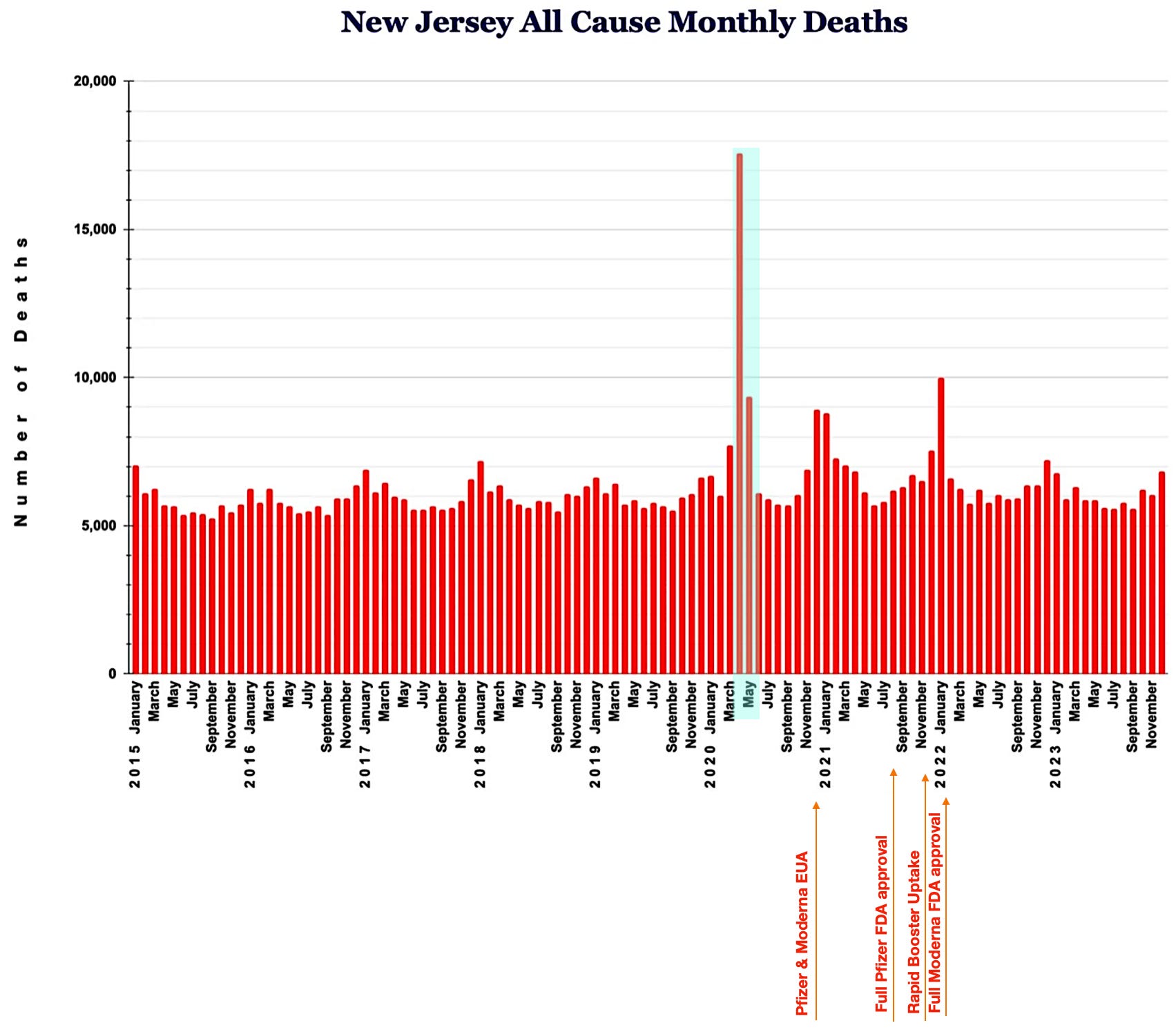
I remember the first time I saw my graph for New Jersey.
.
I did not seem real.
.
.
.
New Jersey State Health Assessment Data
.
.
.
You see, I live out west in that oft-troubled place called Portlandia. And all the happenings on the other end of the country were on the periphery of my awareness. Sure, I had heard about all the deaths in New York. I even watched occasionally (with some admiration at that time) Andrew Cuomo give his daily press briefings.
But it was a world away.
Honestly, what was transpiring in New Jersey never entered my mind … not until I started this work and saw that graph materialize from the numbers.
.
.
.
March 2, 2022
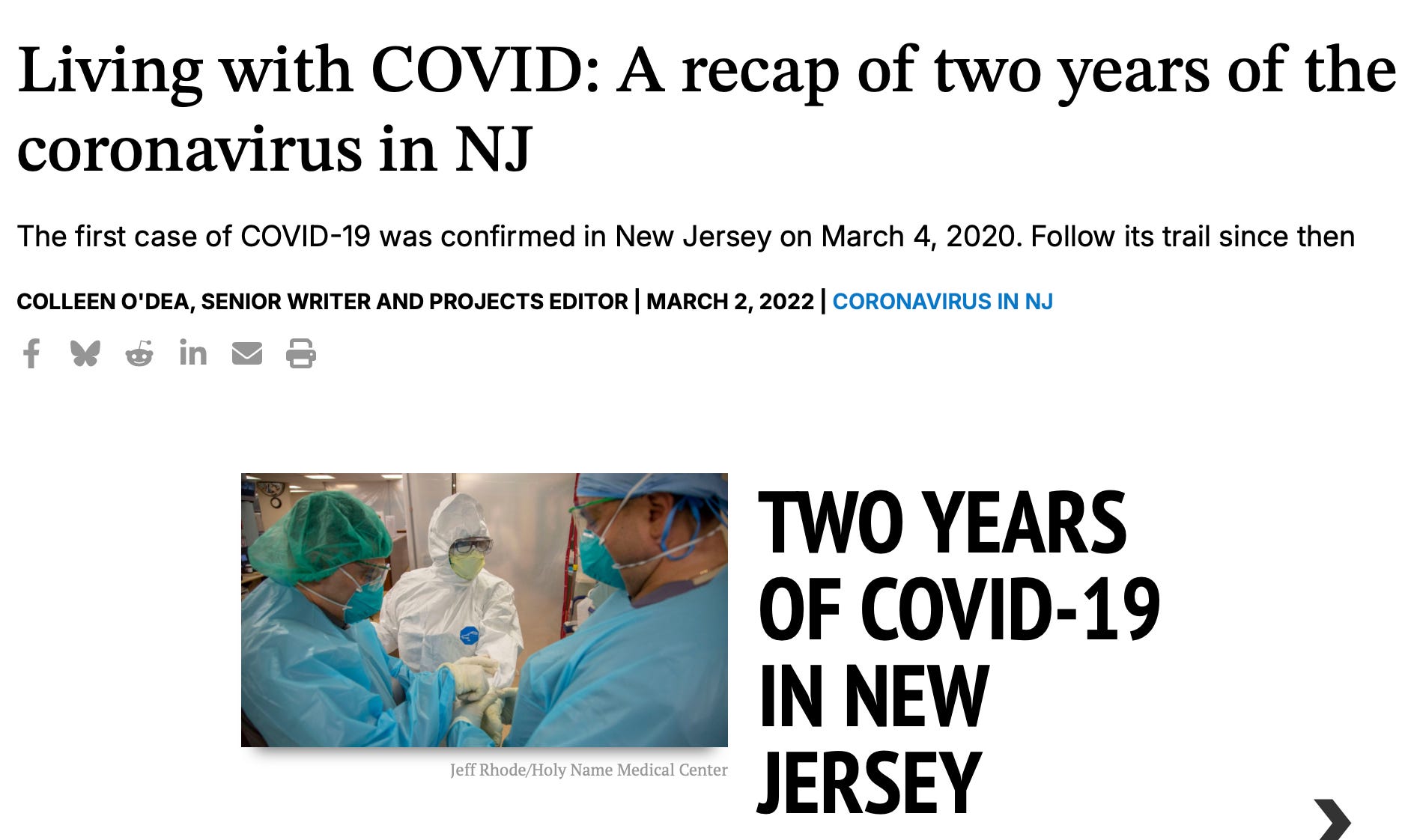
“The first case of COVID-19 was confirmed in New Jersey on March 4, 2020.”
.
.
.
New Jersey Hospital Association
LOSS, LESSONS, LIVES SAVED: New Jersey’s Pandemic Year
“… New Jersey was one of the nation’s first hotspots, confronting the onslaught of COVID-19 before many other parts of the country had fully experienced the virus. Gov. Murphy signed the state-of-emergency order March 9 …”
.
So, just five days after the first case of “covid” in New Jersey, the governor declared a state of emergency? Much like chairman Powell over at the Federal Reserve moving fast on March 15th, apparently Murphy could see well beyond the curve.
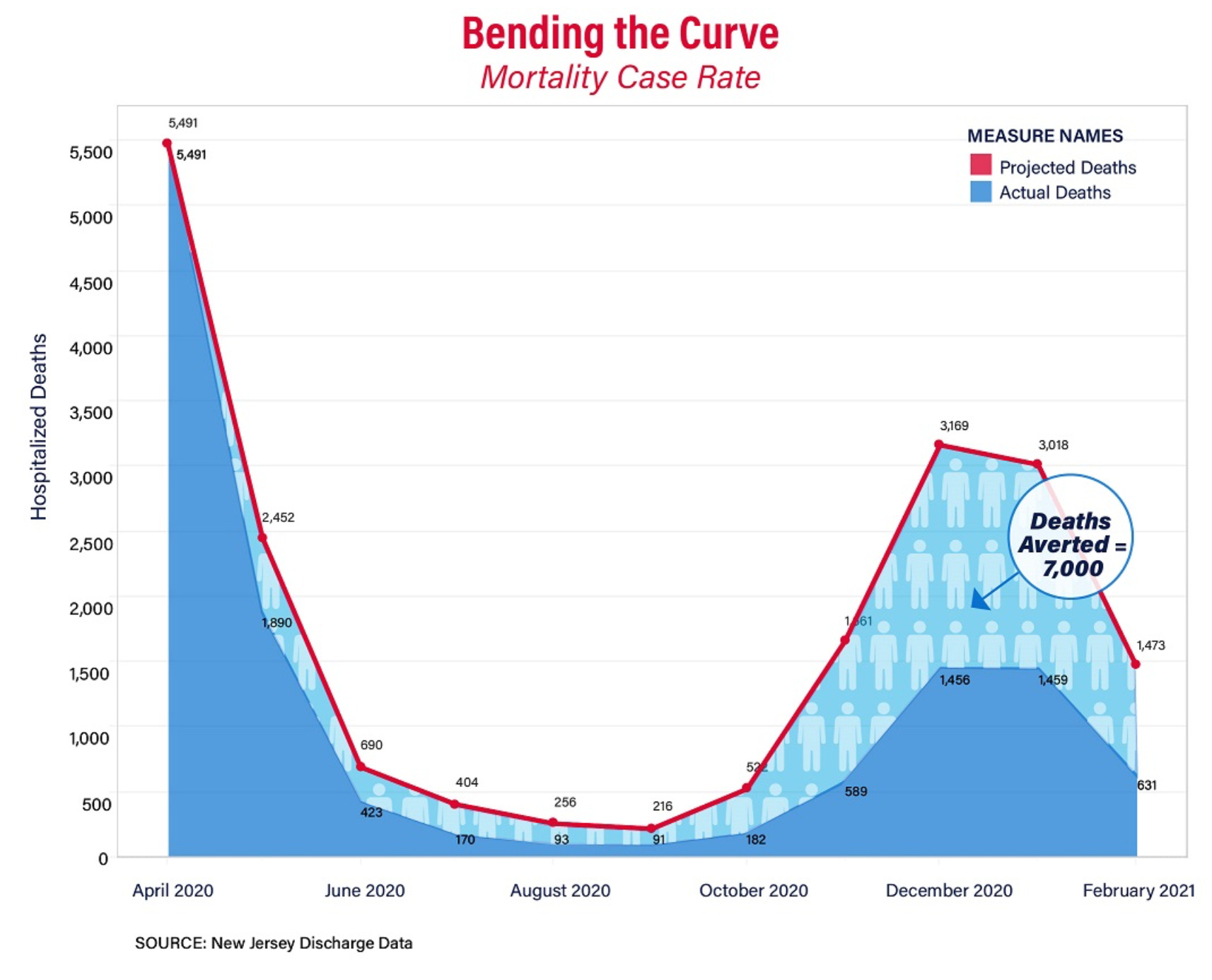
And just look at how prescient the modelers were on that previous graph. They really nailed the projected deaths with the actual deaths in that explosive April massacre.
5,491 for 5,491!
.
By the looks of it, “covid” just burst on to the scene - and our stalwart, calm leaders really knew what to do right off the bat!
Thank goodness.
.
.
.
Do you know what the average yearly pension payment for New Jersey was in 2020?
Around $30,000.
.
.
.
April 21, 2020
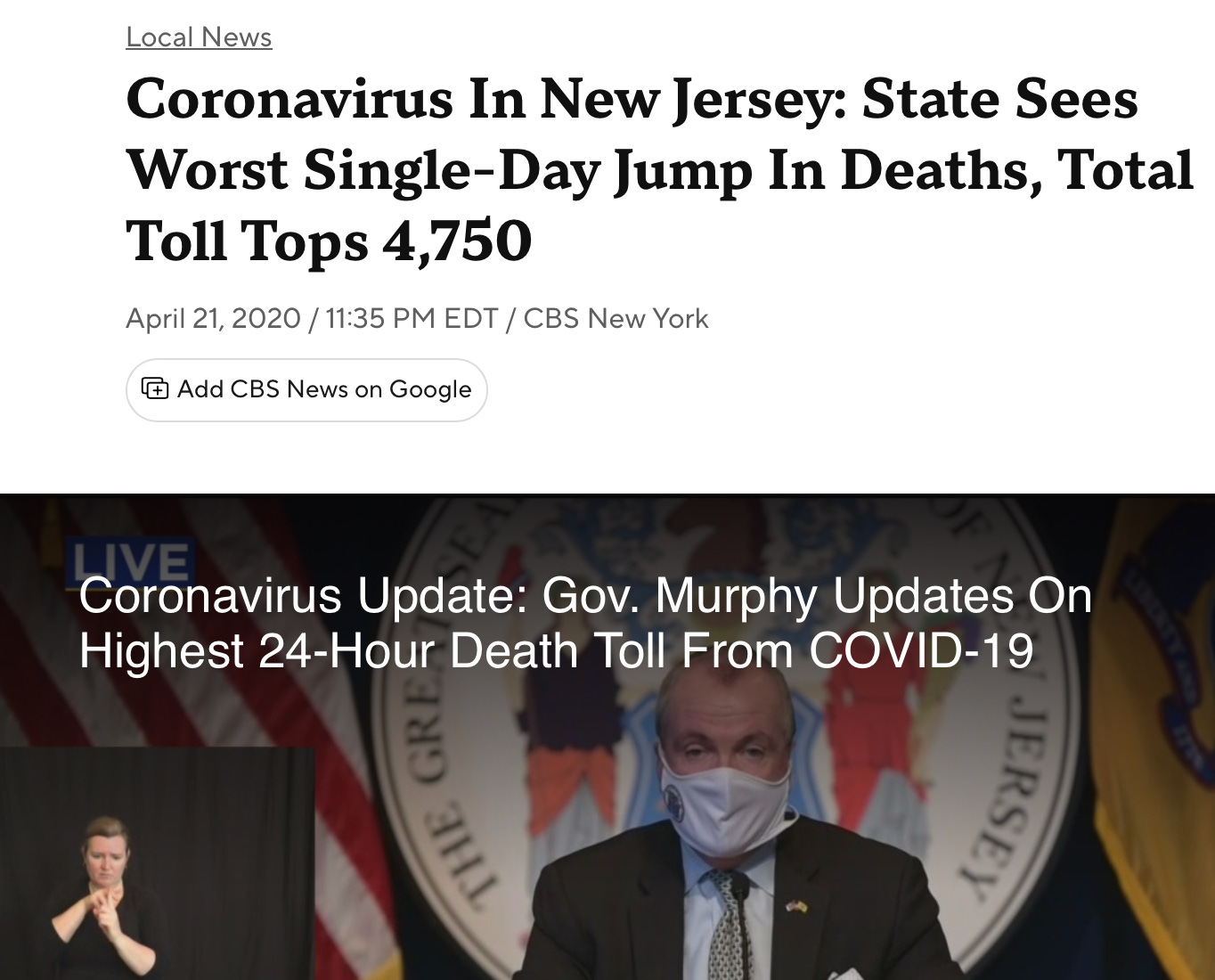
“ … New Jersey saw 3,643 new confirmed cases of COVID-19 in the past 24 hours, raising the state’s total to 92,387 cases.
The resulting toll saw 379 dead due to coronavirus-related illnesses, the worse single-day toll since the outbreak began, putting the statewide total of 4,753.”
.
April would go on to finish up on 04/30/2020 with a total death count of 7,228.
Do you know how many “covid” deaths the month started with?
355.
.
That equates to 229.1 average deaths per day in the month of April.
Let’s just take a very moderate 50% of that figure … and say that 115 pensioners died per day in New Jersey in April of 2020.
If we calculate the erasure of all those pensions, we come up with a figure of a savings of $3,450,000 per day.
So, in the month of April 2020 the state of New Jersey likely saw over one hundred million dollars in pension liabilities go “bye-bye.”
I think that is a pretty fair back of the napkin estimate.
.
.
.
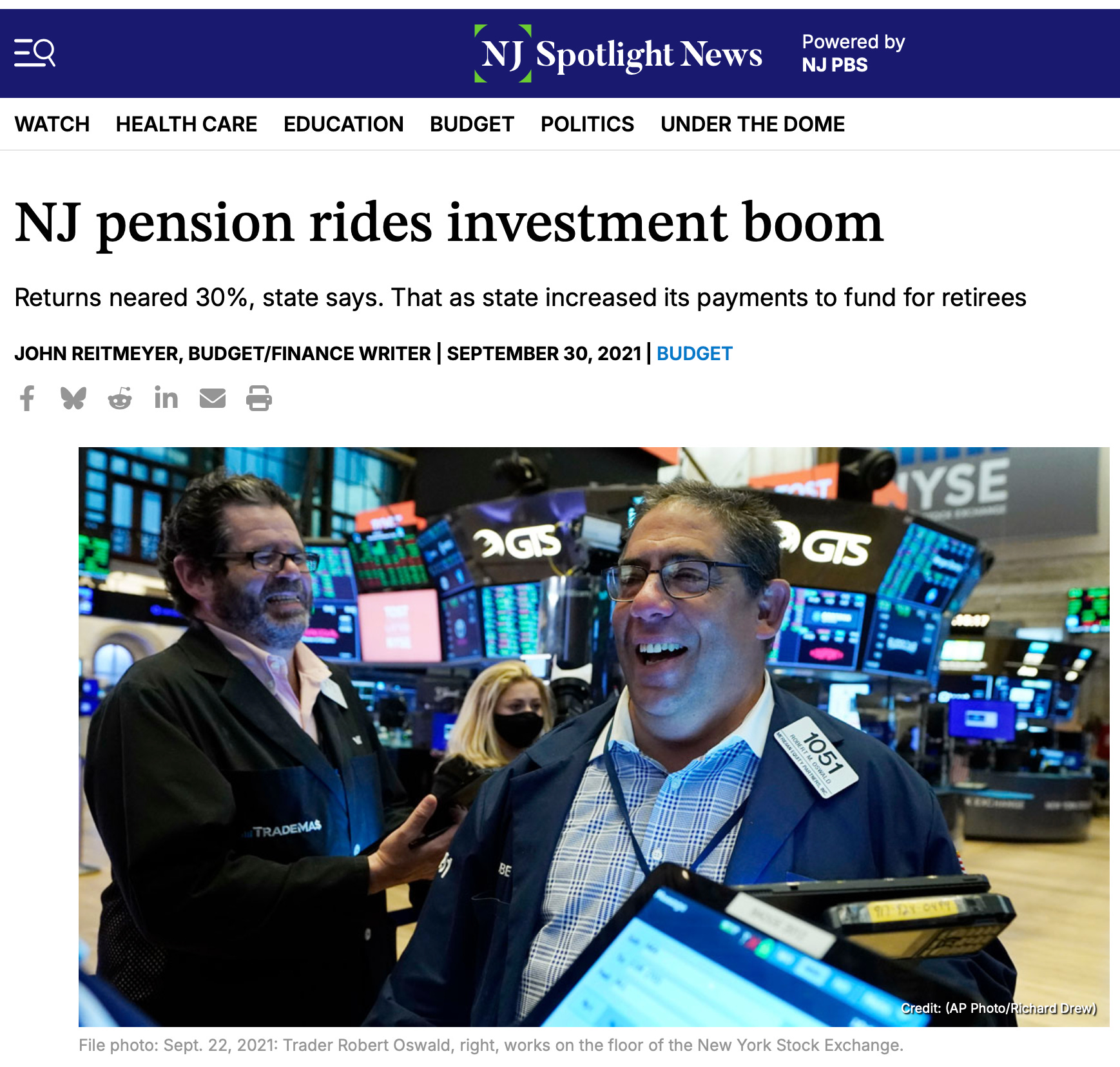
September 30, 2021
“New Jersey’s public-worker pension fund appears to have taken full advantage of Wall Street’s recent hot streak by running up nearly 30% annual returns during the most recent fiscal year.
Though still subject to audit, the annual investment-return figures for the 2021 fiscal year are the highest annual returns that have been recorded by New Jersey’s pension fund managers over the past two decades, according to the Department of Treasury.”
.
.
.
Couldn’t have come at a better time …
.
.
.
December 2021
“While the data relied upon for this study confirm prior analyses of New Jersey’s Pension system underfunding, this study also reveals important comparative points and makes timely recommendations for policymakers who must deal with the future sustainability of both our state and local budgets. New Jersey lawmakers face difficult choices in order to bring the state’s public employee pensions back to financial sustainability since our state plans have suffered more significant financial deterioration than those of most other states …
… In 2001, the PERS plan had 2.7 active employees for each beneficiary; by 2019, the worker-to-beneficiary ratio had fallen to just 1.4 workers to 1 beneficiary. The Teachers plan fell from a worker-to-beneficiary ratio of 2.4 workers per beneficiary in 2001 to 1.3 per beneficiary in 2019, while the Police and Fire plan declined from 1.8 workers per beneficiary in 2001 to just 0.9 in 2019, meaning that the Police and Fire plan had more beneficiaries than active participants. A pension with older demographics is less able to handle investment risk and other risks.”
.
.
.
Back to the celebration…
.
.
.
Governance Finance Officers Association of New Jersey
May 27, 2021
“ … After plummeting at the onset of the pandemic last year, booming investment earnings have helped push the total value of pension fund assets over $90 billion …
Best returns in more than two decades
The soaring preliminary estimates for fiscal year 2021 investment returns are the pension fund’s best returns since 1998, and they could eventually set a new record for a single fiscal year, since more recent performance shows gains moving closer to 24%,officials said.
“If these returns were to hold up, they would mark the best returns on record for a fiscal year for the pension fund,” said Corey Amon, director of Treasury’s Division of Investment …”
.
.
.
.
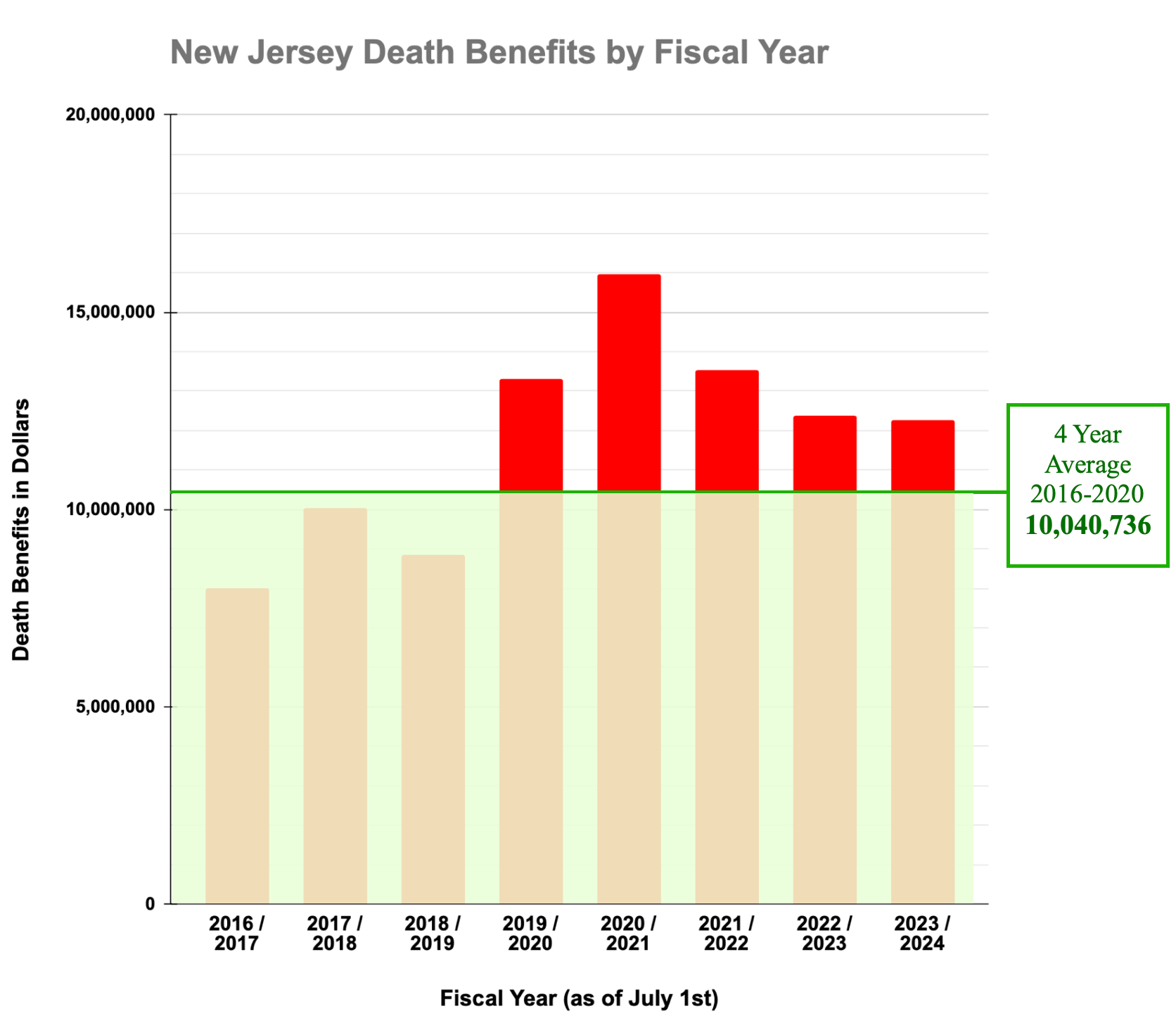
The above graph is from my very first report I did on New Jersey … that was a few months ago.
Like many pension systems, New Jersey’s has many sub-groups:
Public Employees’ Retirement System (PERS)
Teachers’ Pension and Annuity Fund (TPAF)
Police and Firemen’s Retirement System (PFRS)
State Police Retirement System (SPRS)
Judicial Retirement System (JRS)
Prison Officers’ Pension Fund (POPF)
Consolidated Police and Firemen’s Pension Fund (CPFPF)
.
The above death benefit graph only covers the first group, PERS.
As you can see, it is fiscal year 2021 that rises higher than the others, even fiscal year 2020 … the Ghost Bomb year.
Yes, that’s correct.
Think about that. This is a fiscal year ending on June 30th (forget that “as of July 1” phrase, that is confusing) - so the April explosion happened in FY2020.
But even so, FY2021 had the largest death benefits.
Interesting.
.
.
.
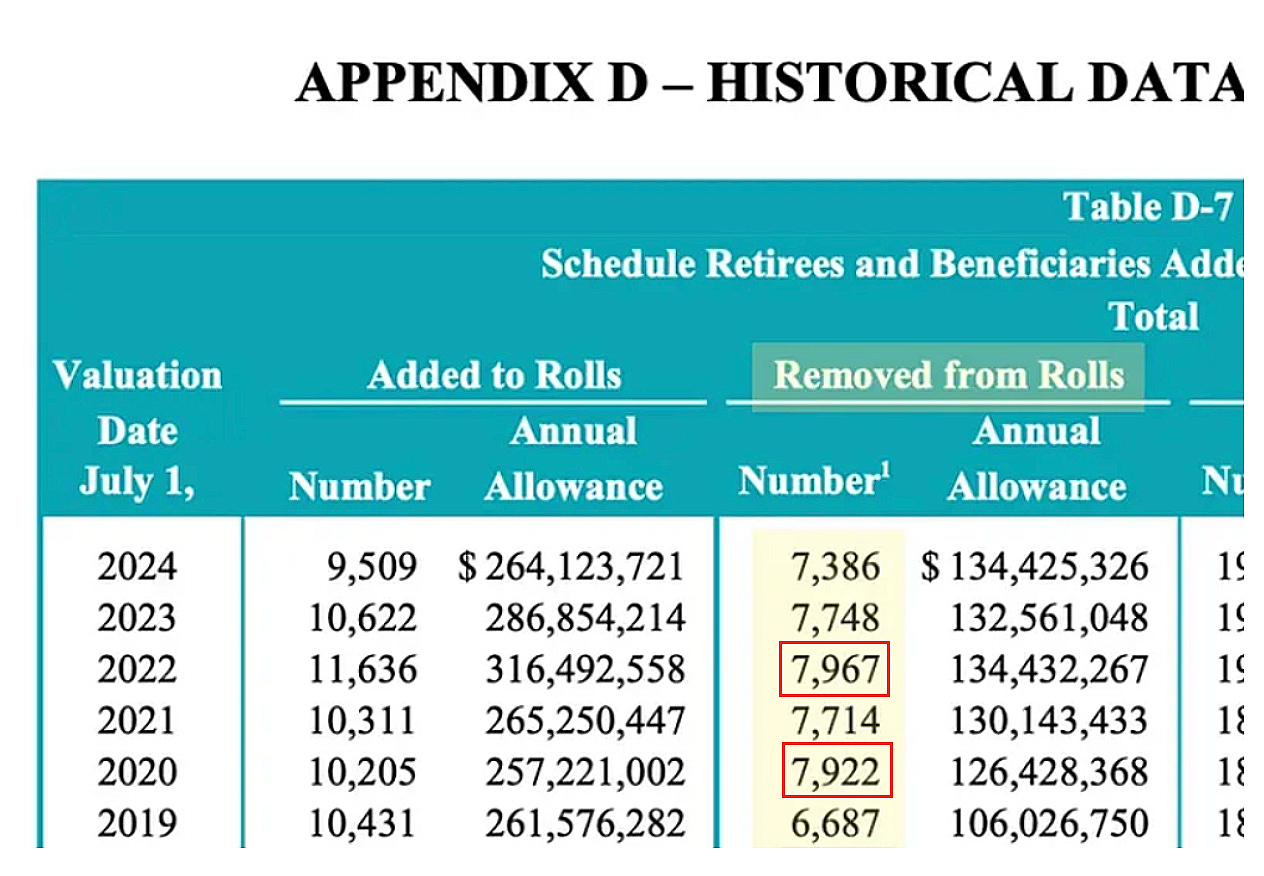
*this is a close-up of a members removed table I reproduced in that first New Jersey post. Do take notice of the two fiscal years boxed in red.
.
FY2022 has a larger total than the Ghost Bomb year, FY2020.
.
.
.
Interesting.
.
.
.
.
.
.
.
Supplemental
.
As I explained in my first “The Ghost Bomb Six” post, this current examination is based on these observations:
In the spring of 2020 there were some places in this country that saw very unseasonal increased mortality. New York and New Jersey being the most notorious examples. I have called what happened in these 14 states (plus Washington D.C.) the “Ghost Bomb.”
In the following year (fiscal year 2021) many of these same places had huge windfalls in their public employee pension plans due to historic investment gains. (But to be fair, so did most U.S. state public pensions.)
These investment gains were happening simultaneously with additional increased member mortality into 2021 and beyond.
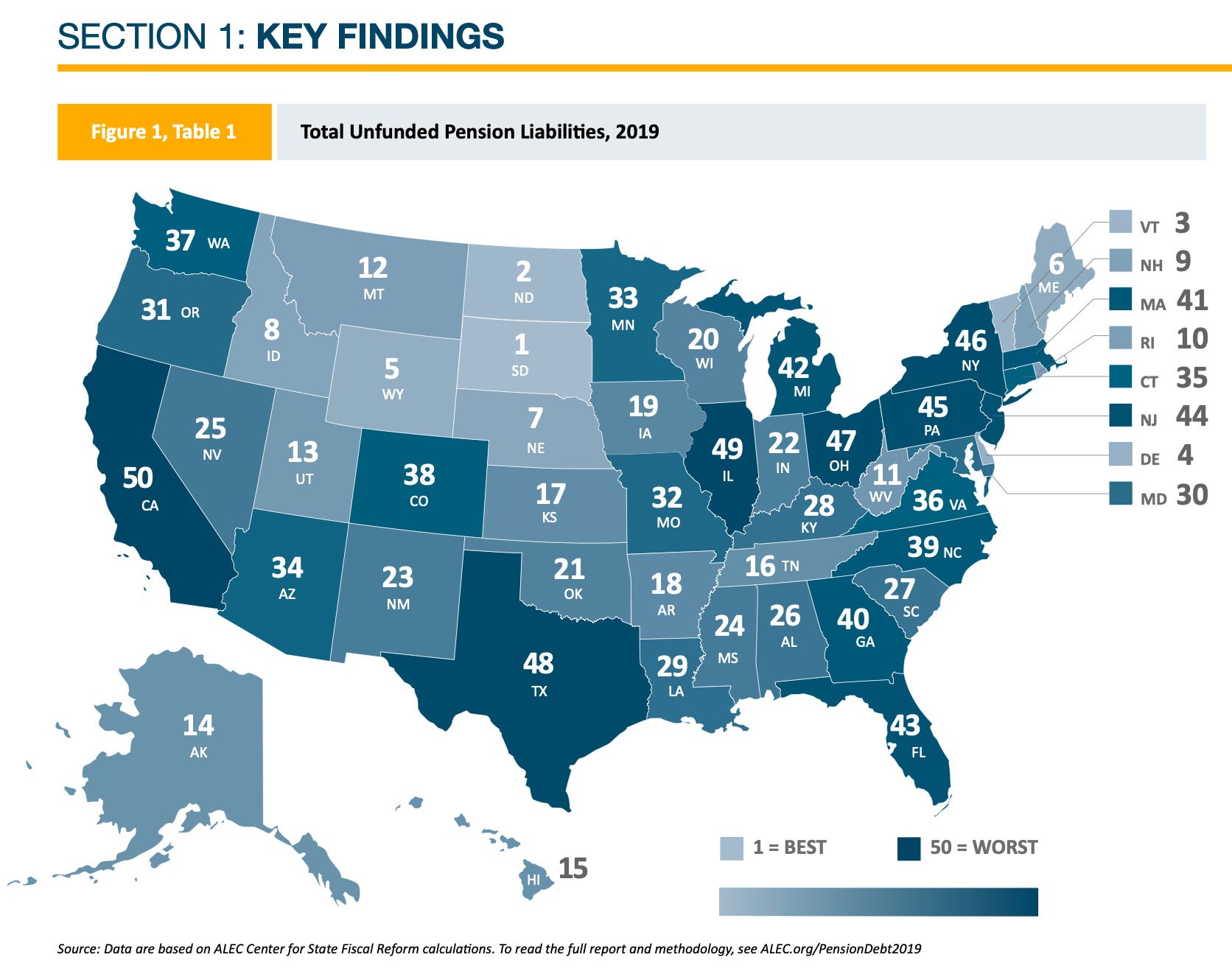
A look back at the solvency of these same pension plans in 2019 shows that many of these 14 locations that experienced the strange 2020 spring death surge were in pretty bad financial shape right before the pandemic hit … in fact, 6 of them were in the worst ten.
Those six are:
Massachusetts
Pension System Rank: 41
Michigan
Pension System Rank: 42
New Jersey
Pension System Rank: 44
Pennsylvania
Pension System Rank: 45
New York …
Pension System Rank: 46
Illinois
Pension System Rank: 49
.
The pensions are ranked with 1=best, and 50=worst.
.
.
.
*in case you have forgotten …
Pandemic Milestones:
January 20, 2020
-First covid case in the U.S.
December 11, 2020
-Pfizer Emergency Use Authorization
December 18, 2020
-Moderna Emergency Use Authorization
August 23, 2021
-Pfizer full FDA approval
December 2021 / January 2022
-CDC and FDA revise booster recommendations
-Rapid booster uptake
January 31, 2022
-Moderna full FDA approval
August 31, 2022
-FDA authorized Pfizer and Moderna’s new bivalent COVID booster vaccines
April 10, 2023
-Biden declares the end of the pandemic
.
.
.
The mayor of Belleville, NJ, Michael Melham, had Covid on November 20, 2019. He said “many” public employees got sick at the same Atlantic City conference. So Covid cases in New Jersey didn’t suddenly explode 4 months later in late march 2020.
The detailed focus and additional information is very valuable in this case, thanks.